
Wesley Chapel Rodent & Wildlife Removal
Mobile Home, Attic, Crawl Space & Soffit Wildlife Protection
Wesley Chapel Rodent & Wildlife Removal Is Essential for Mobile Homes
If you own a mobile home in Wesley Chapel, you need robust help—and quickly. Wesley Chapel rodent and wildlife removal becomes critical because local rodents, raccoons, squirrels, and even armadillos can breach skirting, chew through soffits, and nest in attics. This problem is magnified by the region’s warm, wooded environment and high density of mobile home communities.
Send Us A Message
Why Wesley Chapel Homes Are Targeted
- Rapid development has reduced habitat, pushing wildlife into neighborhoods
- Mobile homes with under-skirt gaps, open crawl space, and aging soffits are frequent entry points
- Local heat and humidity keep pests active year-round
- Surrounding green corridors like Cypress Creek and forest edges facilitate frequent animal movement
Wildlife Species Common in Wesley Chapel Homes
| Animal | Entry Point | Typical Damage / Behavior |
|---|---|---|
| Rats & Mice | Under skirting, vents | Chew wiring, nest in insulation |
| Raccoons & Opossums | Soffits, crawl under decks | Disturb insulation, tear soffits |
| Armadillos | Crawl spaces, tunnels | Dug-out foundations, under skirting |
| Squirrels | Attic vents, soffits | Create nests, chew electrical parts |
| Bats & Snakes | Roof vents, soffits | Access attic voids, legal exclusion needed |
| Birds & Skunks | Soffits, decks | Drop droppings, nesting creates risks |
Signs You Need Our Help
You might need Wesley Chapel rodent and wildlife removal services if you notice:
- Nighttime noises like scratching or gnawing
- Holes or soil piles near skirting or crawl space
- Damaged soffits or attic insulation
- Unusual odors or droppings in crawl areas
- Wildlife sightings around your home—especially at dusk
Our 7-Step Exclusion Process
1. Property Inspection
We assess crawl spaces, skirting, attic vents, soffits, and utility entry points.
2. Wildlife Removal
- Rodents: strategic traps and baiting
- Medium wildlife: cage trapping and relocation
- Bats, squirrels, snakes: seasonal exclusion devices
3. Soffit & Attic Repairs
We repair and reinforce soffits, screen vents, and close openings to prevent re-entry.
4. Barrier Installation
We install ¼-inch galvanized hardware cloth as an L-barrier, buried 8+ inches deep to prevent burrowing and gnawing.
5. Sealing & Skirting Work
Utility penetrations, foundation gaps, and crawl access points are sealed and reinforced.
6. Cleanup & Insulation Restoration
We remove nests, insulation, and droppings, disinfect sites, and replace damaged insulation.
7. Follow‑Up & Prevention
Quarterly visits, landscape advice, and barrier checks help prevent return infestation.
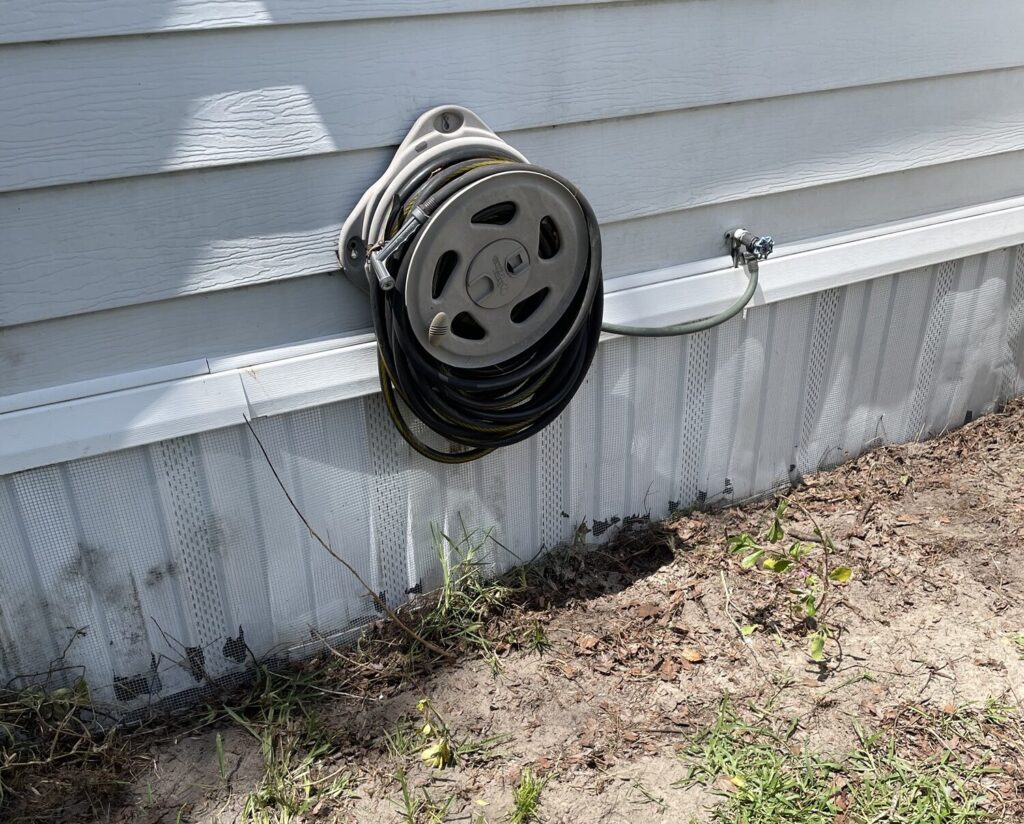
This Wesley Chapel mobile home features a professionally installed quarter-inch hardware cloth barrier, buried 8 inches below the ground to block rodent and wildlife intrusion. The mesh is secured tightly along the skirting and crawl-space perimeter. While homeowners are often concerned about appearance, the barrier is almost unnoticeable once in place and blends in well with the home’s exterior—providing discreet, long-term protection without compromising curb appeal.
What Makes This Approach Effective
- A buried barrier stops digging—hardware cloth holds up to gnawing and shifting soil
- Thorough attic repairs eliminate soffit and vent entry points
- Species-specific methods ensure humane and legal removal, especially for bats
- Cleaning and restoration removes health hazards and restores insulation R‑value
- Scheduled maintenance prevents wildlife from returning
Recent Local Success Stories
- Country Lane mobile community: Rat infestation under skirting resolved with hardware cloth barrier and insulation replacement—no return signs after 6 months.
- Residential attic invasion: Squirrels and rats were evicted, attic vents screened and blocked, crawl space sanitized.
- Deck entry attempts: Raccoon drafts under mobile home blocked, soffit replaced, and foundation sealed.
Start by identifying all potential entry points and sealing them with quarter-inch hardware cloth. Then, set up bait stations or humane traps around the perimeter. Professional exclusion services are often the most effective for long-term prevention.
Yes, especially in Florida’s warm climate. Rats are very common in homes with crawl spaces, like mobile homes, because they offer easy access, food sources, and shelter.
Use a combination of bait stations, traps, and exclusion techniques. Remove all food and water sources. It’s critical to address both interior infestations and exterior access points—especially around mobile home skirting.
Rats enter through small gaps in the skirting, foundation, utility lines, or any holes as small as a quarter. They’re excellent climbers and can dig under homes that aren’t properly sealed.
Yes—but only after you’re certain no rats are currently inside. Sealing holes while rodents are inside can lead to dead animals and odor problems. Use steel mesh or quarter-inch hardware cloth to seal the entry point once it’s verified clear.
Deploy tamper-proof bait stations and traps in the crawl space. For a long-term solution, install a wildlife barrier around the base of the home and bury it to prevent digging. Always sanitize and deodorize the area after removal.