Tarpon Springs Rodent & Wildlife Removal
Mobile Home, Crawl Space, Soffit/Attic & Dead Animal Removal Experts
Tarpon Springs rodent and wildlife removal services protect your home permanently
Living near coastal vegetation and wooded zones, mobile home owners in Tarpon Springs face consistent wildlife pressure. Skirting gaps, unsealed soffits, and vulnerable attic vents invite intruders like rats, squirrels, raccoons, and armadillos. While bait boxes and traps may catch existing pests, they don’t stop re-entry. A physical barrier—either **buried or tap‑conned hardware cloth—is the only guaranteed way to keep animals out permanently.
Send Us A Message
Wildlife Frequently Found in Tarpon Springs Homes
| Animal | Common Entry Routes | Impact & Behavior |
|---|---|---|
| Rats & Mice | Under skirting, soffits, vents | Nest in insulation, chew wires, spread disease |
| Raccoons/Opossums | Soffits, attic vents, crawl access | Tear soffits, disturb insulation, nesting activity |
| Squirrels | Attic vents, soffit breaches | Nest in attic, chew wiring and insulation |
| Bats & Snakes | Roof vents, soffits, voids | Require seasonal legal exclusion methods |
| Armadillos | Burrow beneath structure | Undermine foundation, threaten stability |
| Dead Animal Odors | Under home or attic spaces | Create odors, attract flies and secondary pests |
Signs You Need Wildlife Exclusion Services
- Nighttime noises in walls, attic, or crawl spaces
- Soil mounds or holes near skirting and foundation levels
- Torn soffits, insulation damage, or exposed wiring
- Persistent odor under the home—signaling a possible carcass
- Frequent wildlife sightings underneath or near the property
Our 7-Step Tarpon Springs Wildlife Exclusion Process
- Complete Inspection of skirting, crawl space, attic, soffits, and utility penetrations
- Wildlife Removal via traps or one-way exclusion devices, according to species
- Dead Animal Removal & Sanitization in crawl spaces or attic areas
- Soffit & Attic Repair sealing all entry points and vent breaches
- Hardware Cloth Barrier Installation—buried in soil or tap‑conned to concrete—to ensure permanent exclusion
- Sealing & Restoration of skirting, foundations, vents, with fresh insulation and disinfected areas
- Maintenance & Monitoring including quarterly inspections and homeowner advice to avoid future infestation
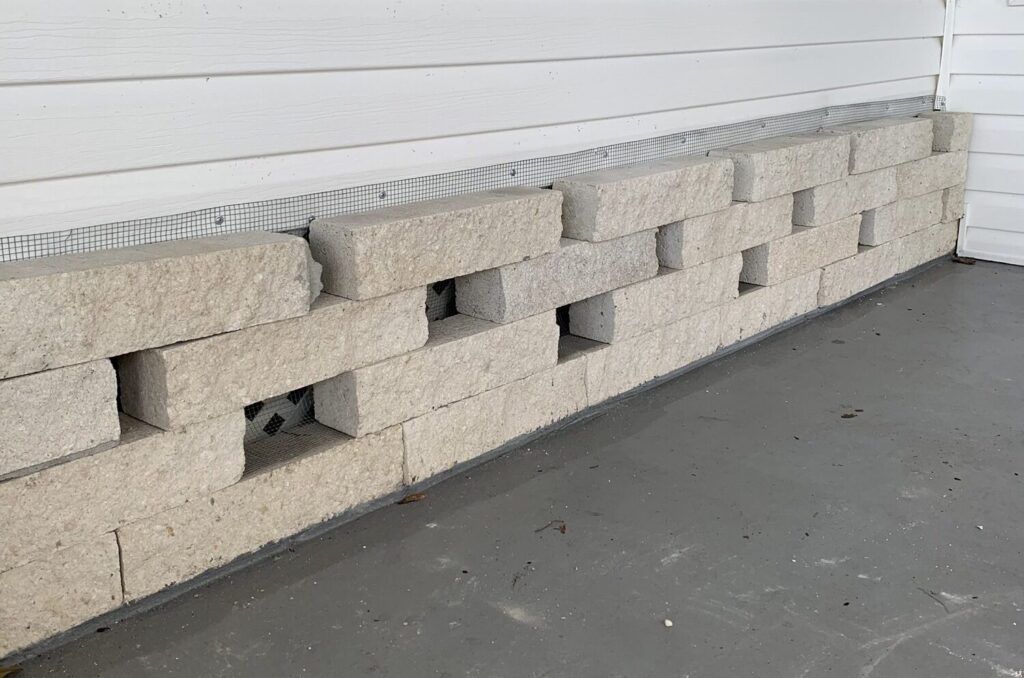
This mobile home in Tarpon Springs is equipped with a quarter‑inch galvanized hardware cloth barrier, securely tap‑conned into the concrete foundation where burial isn’t possible. Combined with sealed soffits and attic vents, it prevents entry from rats, squirrels, raccoons, and other nuisance animals. Despite initial homeowner concerns, the installation is nearly invisible—maintaining curb appeal while offering the only guaranteed way to exclude wildlife effectively.
Why Physical Barriers Outperform Bait Boxes Alone
- Bait boxes trap only the current animals; they do nothing to stop new ones from entering
- Hardware cloth, when properly installed and buried/tap‑conned, offers a true physical exclusion, backed by guarantee
- This is the only method that ensures no new wildlife can access the space, even when the bait is long gone
Tarpon Springs Case Study Example
A mobile home near Sunset Beach reported raccoons in the crawl space and repeated rattling at dusk. After cage-trapping and removing the animals, we installed a hardware cloth barrier tap‑conned into the concrete slab, sealed attic vents and soffits, and cleaned affected insulation. Within days, activity ceased—and no re-intrusion has occurred months later.
The most effective solution is to install a ¼-inch galvanized hardware cloth barrier. It should be either buried 8–10 inches into the ground or tap-conned directly into a concrete slab to stop digging and chewing animals from entering. Spray repellents or bait boxes are not reliable long-term.
Common wildlife under mobile homes in Tarpon Springs includes rats, mice, raccoons, squirrels, opossums, snakes, armadillos, and feral cats. These animals seek warmth, shelter, and protection—making mobile home crawl spaces ideal nesting spots.
Contact a licensed wildlife removal company that specializes in dead animal removal from under mobile homes. They’ll locate the source, remove the carcass, disinfect the area, and recommend exclusion solutions to prevent repeat issues.
The cost can range from $150 to $500, depending on access difficulty, odor severity, and the animal’s location. If cleanup or repairs are needed (like insulation replacement), the total could be higher.
Rodent-proofing includes sealing all holes, installing a ¼-inch hardware cloth barrier, screening attic and soffit vents, and keeping vegetation trimmed away from your home. This prevents access and discourages nesting behavior.