Aripeka Rodent & Wildlife Removal
Permanent Wildlife Exclusion for Mobile Homes—Soffit & Attic Protection, Dead Animal Removal & Barrier Installation
Why Aripeka rodent and wildlife removal matters—especially for mobile homes
In Aripeka—a serene community along the Nature Coast—mobile home dwellers often experience persistent wildlife incursions. The warm climate and wooded surroundings attract species such as rats, raccoons, squirrels, bats, and armadillos. Many homes feature pilings or concrete pads and lack proper skirting or soffit protection, allowing easy access beneath and above. Although bait stations or traps may address the immediate infestation, they do not stop re-entry. Only a hardware cloth barrier—buried or tap‑conned—or optionally sealed from the inside can deliver permanent exclusion. Our team also offers dead animal removal from under mobile homes, vital for odor control and sanitation.
Send Us A Message
Wildlife Likely to Invade Aripeka Homes
| Animal | Entry Points | Impact & Risk |
|---|---|---|
| Rats & Mice | Skirting gaps, crawl space, attic soffits | Nest in insulation, chew wiring, spread disease |
| Raccoons & Opossums | Soffits, crawl access, under decking | Tear insulation, damage wiring, nest overnight |
| Squirrels | Attic vents, soffit openings | Nest in attic, chew wires, cause fire hazards |
| Bats & Snakes | Roof vents, soffit cracks, attic gaps | Legal exclusion needed; contamination or bite risk |
| Armadillos | Burrow under mobile home perimeters | Undermine piers or concrete pads, destabilize structure |
| Dead Animal Carcasses | Crawl space or under skirting | Persistent odors, attract pests, health and mold hazards |
Local sources confirm that rat and squirrel presence is common under mobile homes in Pasco County areas like Aripeka. They frequently invade crawl spaces and attics, causing damage and health risks.
Signs You Need Professional Wildlife & Odor Removal
- Scratching, squeaking, or movement sounds from crawl space or attic at night
- Fresh soil or small holes in skirting or foundation areas
- Torn soffits or damaged insulation in attic or under the home
- Lingering foul odors beneath the structure—suggesting a carcass
- Wildlife sightings near Crawl space vents, soffits, or beneath skirting
Aripeka 7-Step Wildlife Exclusion & Clean-Up Process
- Comprehensive Inspection using borescopes or thermal cameras to identify entry points—especially in attics and crawl spaces.
- Humane Wildlife Removal with live traps or one-way exclusion devices, based on species.
- Dead Animal Removal & Sanitization — locate and safely remove carcasses from under mobile home or attic, clean with enzyme treatments, and deodorize.
- Soffit & Attic Sealing — repair fascia, cap vents, install sturdy screening to block climbing animals.
- Hardware Cloth Barrier Installation — choose from:
- Buried barrier, 8–10″ into soil for crawl space protection
- Tap‑conned barrier attached directly to concrete foundation
- Interior wrap hidden behind skirting for premium aesthetics
- Utility & Skirting Seal-Up — reinforce gaps around utility lines, skirt panels, and foundation penetrations.
- Cleanup & Restoration — replace contaminated insulation, disinfect areas, and schedule quarterly inspections for maintenance.
Because bait boxes catch only current pests, without a physical barrier wildlife will return. Our exclusion system is the only guaranteed method to prevent re-entry.
Why Our Bayonet Point Protocol Truly Works in Aripeka
- Pasco County provides public bait stations—but homeowners still face repeat wildlife entries unless homes are properly excluded.
- Hardware cloth barriers resist both digging and chewing, making them far more durable than soft repellents or traps.
- Sealing soffits and attic space eliminates access for climbing wildlife.
- Removal and cleaning of carcasses eliminate odor, pathogens, and secondary pests.
- Optional interior wrap is ideal for clients prioritizing curb appeal.
Aripeka Local Case Study
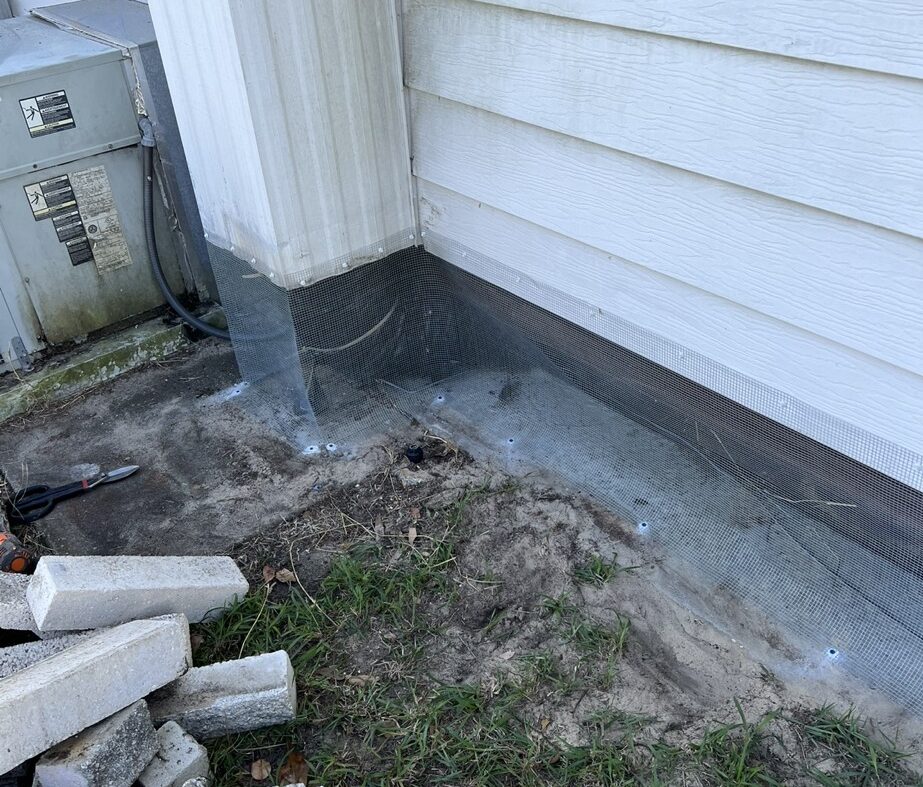
A mobile home near the Aripeka River repeatedly experienced rat activity underneath and foul odors. We conducted a thorough removal, installed a tap‑conned hardware cloth barrier around the concrete pad, sealed attic vents and soffits, and replaced contaminated insulation. Optionally, we performed an interior mesh wrap for a cleaner finish. Six months later, the homeowner confirmed that there was still no wildlife return and no odor problem.
This Aripeka mobile home has a quarter‑inch galvanized hardware cloth barrier securely tap‑conned into a concrete foundation—ideal where soil burial is not an option. Combined with sealed soffits and attic vents, the system prevents entry by rats, raccoons, squirrels, armadillos, and snakes. For a cleaner appearance, we also offer an interior wrap option, attaching the mesh inside the skirting (at higher cost). Most homeowners are pleased that the installation is virtually invisible and it provides the only guaranteed solution to permanently keep wildlife out—unlike bait boxes or traps that just remove current pests.
Frequently Asked Questions — Aripeka Edition
Use a continuous ¼-inch hardware cloth barrier, buried or tap‑conned—and optionally installed behind skirting—for guaranteed exclusion
Common pests include rats, mice, raccoons, squirrels, opossums, armadillos, snakes, bats, and occasionally bats or feral cats.
Contact a licensed wildlife removal technician experienced in dead animal removal from under mobile homes, exclusion box installation, and odor neutralization.
Typical barrier installations, wildlife removal, and cleanup range between $500–1,200 depending on access, odor severity, and whether interior wrap is chosen.
Sealing all entry points, installing a hardware cloth barrier, and repairing soffits and vent screens—combined with ongoing maintenance—provides the only durable rodent-proof solution.