River Ridge Rodent & Wildlife Removal
Mobile Home Wildlife Exclusion • Dead Animal Removal • Soffit & Attic Protection
Send Us A Message
Wildlife Removal Under Mobile Home in River Ridge – Why You Need Professional Exclusion
Wildlife removal under mobile home in River Ridge is not just another pest control task — it’s a critical safeguard for residents in this New Port Richey community. River Ridge is a suburban area in Pasco County surrounded by nature preserves and wetlands, meaning rats, raccoons, opossums, squirrels, snakes, and other critters are never far away. Mobile homes with open crawl spaces, torn soffits, or unsealed attic vents provide inviting shelter for these animals. Meanwhile, many homeowners initially try bait boxes or traps for a quick fix, but those only address the immediate problem and do not prevent new animals from getting in. Only a physical exclusion system will ensure lasting protection. In fact, the only guaranteed solution is installing a ¼‑inch galvanized hardware cloth barrier around the base of the mobile home – correctly installed by burying it 8–10″ into soil, Tap-Con anchoring into concrete, or even an interior wrap behind skirting – combined with sealing up soffits and attic openings. This approach permanently blocks entry and keeps wildlife out for good. Additionally, our team provides dead animal removal from under mobile home structures, which is essential for eliminating foul odors and health hazards if a critter dies beneath your unit.
Wildlife Commonly Found Under River Ridge Mobile Homes
River Ridge’s blend of residential neighborhoods and nearby green spaces (like the Jay B. Starkey Wilderness Park’s swamps and forests “teeming with wildlife”) means a variety of animals can find their way under mobile homes. For example:
- Rats & Mice: Squeeze through crawl space gaps, damaged skirting, or vent openings. They nest in insulation, chew electrical wires, and contaminate areas with droppings (potentially spreading diseases).
- Raccoons & Opossums: Tear into broken soffits, attic vents, or open crawl spaces under homes. These larger animals can rip insulation, damage ductwork, and even pry up sections of flooring to nest under your mobile home.
- Squirrels: Enter through attic vent holes or cracks in eaves and soffits. They gnaw on wiring and wood, and build nests in attics or wall voids, posing fire hazards and noise issues.
- Bats & Snakes: Slip through roof vents or gaps in siding. Bat colonies leave toxic guano (droppings) and require legal, humane exclusion; snakes (including venomous species) may seek rodents under homes or in damp crawl spaces, alarming residents.
- Armadillos: Dig burrows under skirting or pier foundations. Consequently, their tunneling can cause ground subsidence, undermine support piers, and create pathways for other rodents to follow.
- Dead Animal Carcasses: When an animal dies hidden under a mobile home, it leads to strong odors, fly infestations, and mold. Florida’s heat can make a dead rat or opossum smell unbearable, requiring prompt removal and sanitation.
Local wildlife removal professionals in Pasco County confirm that all these intruders frequently invade mobile and manufactured homes in communities like River Ridge. Thus, it’s important to recognize the signs and act quickly.
Signs You May Have Wildlife (or Odor) Issues
How can you tell if something is nesting under your mobile home or in your attic? Look for these common warning signs:
- Scratching or scuttling noises coming from the crawl space or attic, especially late at night or before dawn (when nocturnal critters like rats or raccoons are active).
- Fresh soil mounds or burrow holes near the skirting, foundation edges, or HVAC pads – these could indicate armadillos or rats digging underneath.
- Damaged soffits or vents, shredded insulation, or gnaw marks on wood and wires. For instance, you might spot a torn soffit panel or chew holes around pipe entries.
- Persistent foul odors emanating from beneath the mobile home or inside walls. A strong, decaying smell often signals a dead animal under the home, which can attract flies and other pests.
- Visible wildlife sightings around your unit – like a raccoon seen darting under the porch, snakeskins left near the skirting, or rodents running along utility lines. These sightings often mean there’s an entry point allowing pests inside.
If you notice any of these signs, do not ignore them. Furthermore, avoid simply masking odors or hoping the noises stop on their own – it’s likely an active infestation or animal intrusion that needs to be addressed.
Our 7-Step River Ridge Wildlife Exclusion & Cleanup Process
To resolve wildlife problems under mobile homes and prevent them from returning, we follow a comprehensive seven-step process for River Ridge residents. Each step is crucial to ensure your home is critter-free and stays that way:
- Detailed Inspection: We conduct a thorough evaluation of your property’s vulnerable areas – from the crawl space under the mobile home and the skirting around it, to attic vents, soffits, and foundation edges. Our specialists use tools like borescope cameras and thermal imaging when needed to spot hidden nests, entry holes, or moisture issues. This step identifies which species are present (rats, raccoons, etc.) and how they’re getting in.
- Humane Wildlife Removal: Next, we safely remove the animals currently on your property. Depending on the species, this may involve setting tailored live traps, installing one-way exclusion doors, or gently evicting animals by hand. For example, rats and mice might be caught with strategic trapping and one-way tunnel systems, while mother raccoons or opossums can be live-captured and relocated following Florida Fish & Wildlife (FWC) guidelines. We always follow all wildlife regulations and humane practices, ensuring no animals are unnecessarily harmed.
- Dead Animal Removal & Deodorization: If our inspection or your reports indicate a carcass under the home (a common source of horrible smells), we will locate and retrieve it. This involves crawling into tight under-home spaces to safely bag and remove the dead animal from under the mobile home. Afterwards, we disinfect and treat the area with enzyme cleaners to break down any biological fluids, and we use commercial-grade deodorizers to neutralize lingering odors. Prompt dead animal removal not only improves air quality but also prevents secondary infestations of flies, beetles, or other scavengers that are attracted to carcasses.
- Soffit & Attic Sealing: Many wildlife intrusions start from above. We inspect all soffits, eaves, attic vent screens, and AC chase ways for gaps. Then, we repair or replace damaged soffit panels, securely cap attic vents with mesh, and reinforce weak spots in fascia boards. This step closes off any “upper level” entry points, so animals can’t climb or gnaw their way into your attic or walls. Additionally, by sealing these openings we stop rodents or squirrels that often climb trees and utility lines from accessing your roof.
- Hardware Cloth Barrier Installation: This is the core of our exclusion strategy – creating a permanent barrier around the base of your mobile home so nothing can re-enter. We use tough ¼-inch galvanized hardware cloth mesh (wire screening) because its small grid size blocks even tiny mice and snakes, and its metal construction resists chewing by rats or squirrels. Depending on your foundation type, we offer three installation options:
- Buried Mesh: We dig a trench around the mobile home and install the hardware cloth L-shaped, burying it 8–10 inches deep in the soil and extending outward. This prevents diggers (like armadillos or skunks) from tunneling underneath. Concrete Anchor (Tap-Conned): If part of your home’s perimeter sits on concrete or a slab, we use concrete screws (Tap-Cons) to firmly attach the mesh to the base and seal any gaps. The mesh is flush with the ground or patio, creating a solid barrier that animals cannot chew or squeeze past. Interior Wrap (Hidden Mesh): For a cleaner look (at additional cost), we can install the hardware cloth inside behind your decorative skirting. This interior wrap means the mesh isn’t visible from the outside, yet it still provides full protection by covering all crawl space openings behind the scenes. It’s a popular choice to maintain curb appeal while getting the same level of defense.
- Utility Line & Skirting Reinforcement: We systematically seal up all the other nooks and crannies that animals use to wiggle inside. For instance, gaps around plumbing pipes, AC tubing, or electrical conduits under the mobile home are packed or screened off so nothing can squeeze through. We also repair any loose or bent skirting panels and strengthen them as needed (using screws or additional framing) so that the skirting itself cannot be pushed in or pried open by persistent critters. Ultimately, this step ensures the entire undercarriage and perimeter of your mobile home is critter-proof.
- Cleanup, Restoration & Maintenance: Finally, we restore your mobile home’s environment to a clean and safe state. This includes removing soiled insulation or nesting materials the animals left behind, applying sanitizers to eliminate pheromones (which can attract new pests), and replacing any insulation or vapor barrier as needed. We then provide follow-up support, such as quarterly or seasonal inspections and maintenance tips. Additionally, we’ll schedule checkups to ensure our exclusion work remains intact – adjusting or repairing any wear-and-tear so your home stays protected long-term.
Importantly, bait boxes and traps alone only manage the immediate infestation; they will not stop new animals from entering. In contrast, combining durable barriers with thorough sealing is the only way to guarantee that wildlife stays out for good.
This integrated approach addresses the root cause of the issue (openings and attractants around your home) rather than just removing the symptoms. It’s a one-time investment in peace of mind, versus dealing with repeated trapping of critters month after month. After all, experts agree that “trapping is seldom the best solution” and that it’s wiser to fix the problem permanently by blocking entry routes.
Below, you can see an example of our exclusion work on a Florida mobile home. The photo shows the hardware cloth barrier installed securely along the skirting, which will stop even the smallest pests:
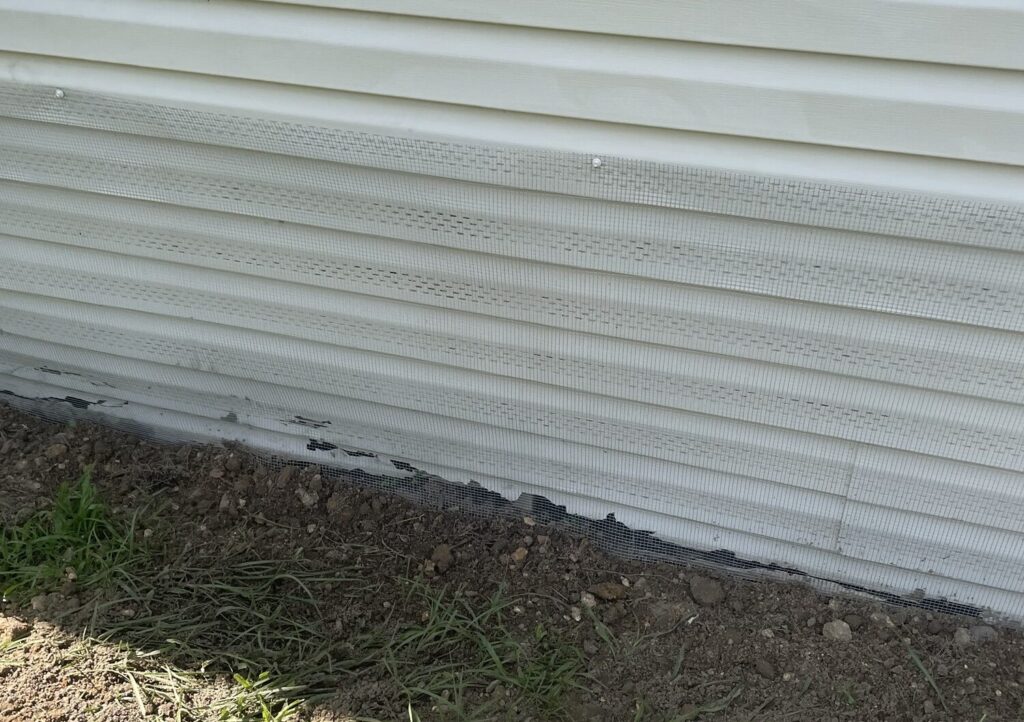
As shown above, the ¼-inch mesh barrier is virtually invisible from a distance, yet it completely blocks animals from re-entering. We also sealed the soffit vents and other openings on this home. An interior wrap installation (if chosen) would hide the mesh behind the skirting, maintaining the home’s appearance. Regardless of the installation method, this hardware cloth barrier is the only guaranteed solution to prevent wildlife from coming back – it’s far more effective than relying on bait stations or periodic trapping. Furthermore, the mesh is chew-proof and dig-proof, so pests simply cannot bypass it. When combined with our thorough -exclusion of other entry points, you get long-term protection for your River Ridge property.
FAQs for River Ridge
To keep animals away from underneath your River Ridge mobile home, the best solution is to install a continuous ¼-inch hardware cloth barrier around the entire base of the home. This mesh can be buried in the ground, anchored to concrete, or installed behind your skirting for a hidden finish. When combined with sealed soffits and vent covers, it’s the only guaranteed exclusion method to block rats, snakes, raccoons, and other wildlife from getting under your home
Common intruders under mobile and manufactured homes in River Ridge include rats, mice, squirrels, raccoons, opossums, armadillos, bats, and occasionally snakes or stray cats. These animals are attracted by shelter and food sources. For example, rats and mice look for cozy nesting spots in insulation, raccoons and opossums may den under porches or in crawl spaces, and armadillos dig for insects in the soft soil beneath units. Even bats might roost behind loose skirting if there’s an opening. Homeowners should also be mindful of these creatures climbing into attics or soffits if gaps are present.
If you suspect a dead animal is under your mobile home (due to strong odors or flies), you should contact a licensed wildlife removal professional for safe dead animal retrieval. Professional dead animal removal from under mobile home structures ensures that the carcass is handled with proper protective equipment and disposed of safely. Our team will locate and extract the dead animal, deodorize the area, and sanitize to eliminate bacteria and odor particles. It’s important not to attempt this yourself due to health risks and the difficulty of accessing tight crawl spaces. In River Ridge, our service handles everything from crawl-space access to odor neutralization as part of the dead animal removal process
The cost can vary depending on the extent of the infestation and the size of your mobile home, but in general, a full wildlife removal and exclusion package in River Ridge typically ranges from a few hundred to over a thousand dollars. For example, a basic package might start around $600 for removing animals and installing a standard barrier, whereas a more complex job (with multiple dead animals, extensive damage repair, or a large double-wide unit needing interior mesh wrap) could run up to $1,200 or more. We provide an on-site assessment and quote, so you’ll know the price before work begins. Keep in mind that this is a one-time investment for long-term protection – compared to the recurring cost of repeated trap-and-remove services if you don’t fully exclude the pests.
River Ridge’s location and environment make it particularly prone to wildlife issues. The neighborhood is adjacent to natural areas like Starkey Wilderness Park and Moon Lake, which means there’s a larger wildlife population nearby. Additionally, many homes in River Ridge are single-story structures or mobile homes with accessible crawl spaces, which present easy opportunities for animals to shelter. The climate also plays a role – Florida’s frequent thunderstorms and occasional cold snaps drive animals to seek refuge under solid structures. Combine that with abundant food sources (fruit trees, gardens, pet food left outdoors, etc.), and you have a recipe for regular wildlife intrusions. This is why proactive measures, like securing your mobile home with a hardware cloth barrier and sealing entry points, are so important in our area.