Gulfport Rodent & Wildlife Removal
Mobile Home Wildlife Exclusion • Dead Animal Removal • Soffit, Attic & Ground Vent Protection
Why Gulfport rodent and wildlife removal is vital
Gulfport, a coastal city on Boca Ciega Bay, features a variety of residential properties—including older mobile homes on slab, crawl-space, and pier foundations. These homes have exposed soffits, attic vents, crawl spaces, and ground vents, making them attractive to wildlife during nesting and breeding seasons. Wildlife like rats, raccoons, squirrels, opossums, bats, snakes, and armadillos commonly invade these entry points. While traps or bait might remove present pests, they don’t prevent future access. Only a permanent solution—sealing soffits, attic vents, ground vents with ¼‑inch hardware cloth, and installing a continuous hardware cloth barrier around foundations—provides real protection. Added to this is our service for dead animal removal from under mobile homes, essential for eliminating odors and health risks.
Send Us A Message
Wildlife That Invades Gulfport Mobile Homes
- Rats & Mice – slip through ground vents or crawl-space openings and chew insulation
- Raccoons & Opossums – gain access via damaged soffits or crawlspace gaps
- Squirrels – enter attic vents and create nests, even chew wiring
- Bats & Snakes – exploit narrow cracks in soffit lines or roof decking
- Armadillos – burrow under skirting or foundations, destabilizing structures
- Hidden Carcasses – decompose under homes, causing lingering foul odor and attracting flies
Coastal humidity in Gulfport creates a favorable environment for mold, decay, and nesting wildlife—but proper exclusion prevents these issues.
Signs You Might Have Wildlife in Your Home
- Nocturnal scratching, rustling, or gnawing from beneath crawl spaces, attic spaces, or ground vents
- Fresh soil mounds or burrow entrances around vents or foundation bases
- Torn soffits, missing vent covers, or shredded insulation
- Persistent foul smell under the home—often indicating a dead animal
- Rare daytime wildlife sightings near crawl-access or vent areas
Our 7‑Step Gulfport Wildlife Exclusion & Cleanup Process
- Comprehensive Inspection
We conduct a detailed inspection of soffits, attic vents, crawl spaces, ground vents, and foundation lines—using borescopes, thermal cameras, and moisture sensors. - Humane Wildlife Removal
Live trapping or one-way exits are chosen per species and performed according to local wildlife laws. - Dead Animal Removal & Sanitization
Hidden carcasses under the home are safely removed, then the space is sanitized with enzyme cleaners and odor neutralizers to prevent contamination. - Soil, Soffit, Attic & Ground Vent Sealing
We seal or replace damaged soffits and attic vents. For ground vents, we install ¼‑inch hardware cloth behind the vent that allows airflow while preventing animal entry. - Hardware Cloth Barrier Installation
Depending on foundation type:- Buried mesh 8–10″ deep in soil crawl areas
- Tap‑conned mesh into concrete slabs
- Interior wrap behind skirting for a clean finish (premium add-on)
- Skirting & Utility Seal-Up
Access points and utility penetrations are sealed and skirting panels reinforced to fully enclose the home’s perimeter. - Final Cleanup & Ongoing Maintenance
Insulation damaged by wildlife or moisture is replaced, contaminated areas cleaned, and quarterly inspections scheduled to ensure no new entry points emerge.
This approach ensures permanent protection—unlike traps or bait, which only address existing pests.
Why Our Approach Works in Gulfport
- Permanent wildlife exclusion: ¼‑inch hardware cloth withstands gnawing, digging, and crawling
- Retains ventilation: Mesh behind ground vents allows airflow while blocking entry
- All-season defense: Sealed soffits and vents prevent nesting, year-round
- Health-first strategy: Dead animal removal eliminates mold, odors, and pest breeding sites
- Neat results: Interior wrap hides barriers, preserving home curb appeal
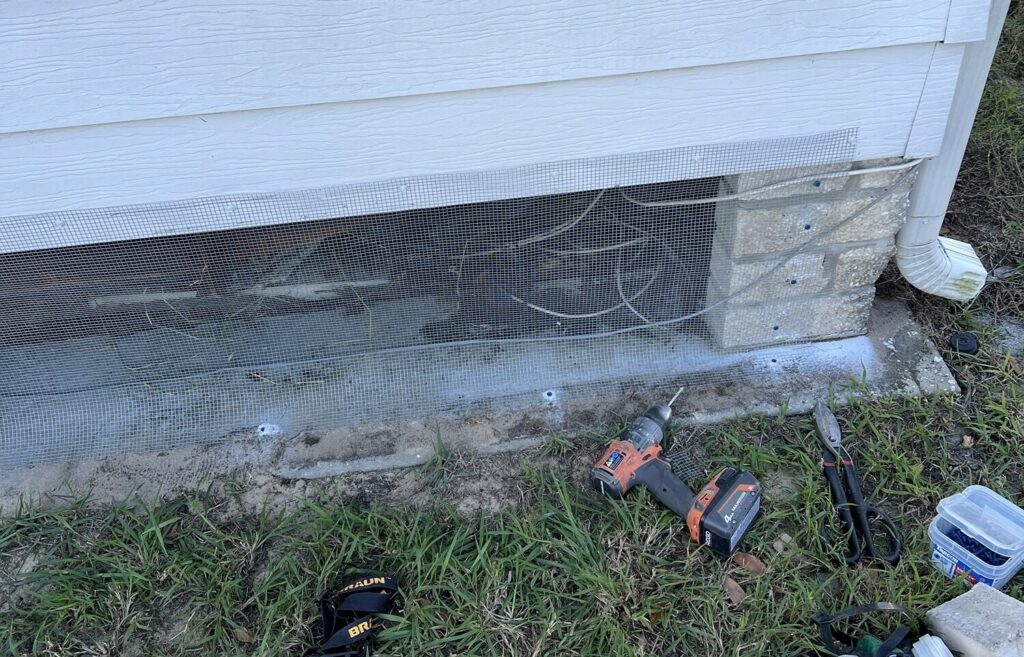
This Gulfport mobile home features a ¼‑inch galvanized hardware cloth barrier—installed either buried or tap‑conned based on foundation type—with soffits, attic vents, and ground vents all sealed with mesh to block wildlife while preserving airflow. Customers can choose an interior wrap option to hide the barrier behind skirting. This comprehensive system is the only guaranteed method to prevent wildlife entry—superior to bait or traps.
Local Context: Wildlife Challenges in Gulfport
Gulfport’s proximity to coastal ecosystems, wooded areas, and older mobile homes means frequent wildlife incursions—especially during wet seasons. Homes need structural exclusion to avoid repeated infestation and structural decay.
Take Action—Book Your Free Gulfport Inspection
Protect your mobile home with our full-service package:
- Comprehensive wildlife and dead animal removal
- Guaranteed hardware cloth barrier (interior/exterior)
- Soffit, attic, and ground vent sealing
- Insulation restoration and sanitation
- Quarterly inspections to maintain wildlife protection
Gulfport–Focused FAQs
A continuous ¼‑inch hardware cloth barrier (buried, tap‑conned, or interior-wrapped), coupled with sealed soffits, attic vents, and secured ground vents (each reinforced with hardware cloth mesh).
Only when reinforced: we install ¼‑inch hardware cloth behind ground vents to block wildlife while maintaining crawl-space airflow.
Absolutely. Hidden carcasses emit foul odors, attract pests, and promote mold. Rapid removal is essential for home health and safety.
No. They address only current infestations. Exclusion requires physical barriers—hardware cloth and sealed vents.
A full package—including wildlife removal, ground-vent mesh, barrier installations, and odor cleanup—runs $600–1,500, depending on foundation and optional interior wrap.