Redington Beach Rodent & Wildlife Removal
Mobile Home Wildlife Exclusion • Dead Animal Removal from Under Mobile Home • Soffit, Attic & Ground Vent Sealing
Why Redington Beach rodent and wildlife removal is crucial
Redington Beach rodent and wildlife removal safeguards coastal mobile homes from recurring wildlife intrusions. Nestled along the Gulf Coast in northern Pinellas County, Redington Beach features many mobile homes on pier, crawl-space, or slab foundations. These homes often include exposed soffits, attic vents, crawl areas, and ground vents, which create easy access for wildlife—such as rats, raccoons, squirrels, opossums, bats, snakes, and armadillos. Traps or bait may temporarily reduce pests, but they do not stop wildlife from returning through the same vulnerable points. The only proven long-term solution combines sealing soffits, attic vents, and ground vents with ¼‑inch hardware cloth, installing a barrier (buried, tap‑conned, or interior-wrapped), and offering dead animal removal from under mobile homes to eliminate odors and prevent health hazards.
Send Us A Message
Coastal mobile homes face unique vulnerabilities
• Pier foundations expose under-home crawl areas to wildlife.
• Crawl-space homes with ground vents are susceptible to rodent entry.
• Slab foundations often have utility chases or gaps near skirting.
• Warm weather accelerates wildlife breeding—year-round exclusion is essential.
Wildlife Commonly Invading Redington Beach Mobile Homes
Rats & Mice
Rodents squeeze through ground vents and crawl spaces, chewing insulation, wiring, and contaminating interiors with droppings.
Raccoons & Opossums
Powerful climbers that exploit soffit or crawl-access openings to nest and forage under homes.
Squirrels
Gnaw their way into attic vents and rooflines, tearing up wiring and insulation.
Bats & Snakes
Silently infiltrate soffit gaps, attic eaves, or vent lines—posing health risks, especially in attics.
Armadillos
Dig burrows under skirting or slab edges, weakening foundations and creating crawl-space access.
Hidden Carcasses
Dead animals under homes produce foul odors, attract insects and rodents, and contaminate the interior if left untreated.
Signs You Have Wildlife Problems
- Nocturnal Sounds
Hearing rustling, scratching, or gnawing near crawl spaces, ground vents, or attic vents. - Soil Mounds
Small holes or piles near vents, skirting panels, or foundation edges. - Vent Damage
Torn soffits, missing vent covers, shredded insulation, or chewed wiring. - Foul Odors
Persistent smells from under the home often signal a hidden carcass. - Wildlife Sightings
Sightings near vents, under skirting, or inside crawl areas.
Prompt investigation and intervention are key—what starts minor can escalate quickly, potentially damaging insulation, wires, structure, and indoor air quality.
Our 7‑Step Redington Beach Wildlife Exclusion & Cleanup Process
- Full Inspection
We examine soffits, attic and ground vents, crawl areas, and foundation lines using borescopes, thermal cameras, and moisture sensors. - Humane Wildlife Removal
Live traps or one-way exits used for each species, fully compliant with Florida wildlife regulations. - Dead Animal Removal & Sanitization
Hidden carcasses under mobile homes are removed promptly. We sanitize using enzyme-based cleaners and odor neutralizers. - Soffit, Attic & Ground Vent Sealing
Damaged vents are sealed or replaced. Ground vents get sealed with ¼‑inch hardware cloth on the back side—maintaining airflow while preventing wildlife entry. - Hardware Cloth Barrier Installation
Depending on foundation:- Buried mesh 8–10″ deep in soil crawl-spaces
- Tap‑conned mesh anchored into concrete slabs
- Interior wrap behind skirting, hidden yet effective (premium option)
- Skirting & Utility Seal-Up
We seal around pipes, cables, utility fixtures, and reinforce skirting panels, ensuring complete exclusion. - Final Cleanup & Quarterly Maintenance
Damaged insulation is replaced, affected areas sanitized, and quarterly inspections scheduled to maintain barrier effectiveness and prevent wildlife return.
This system—ground vent sealing, soffit/attic protection, barrier installation, and carcass cleanup—offers the only permanent wildlife defense.
Why Our Method Works in Redington Beach
- Complete wildlife exclusion with durable ¼‑inch hardware cloth resisting gnawing and digging
- Ground vent reinforcement retains airflow and prevents rodent access
- Year-round exclusion through sealed soffits and attic vents
- Health-conscious cleanup eliminates mold risk, allergens, and odors
- Clean appearance with optional interior wrap maintaining curb appeal
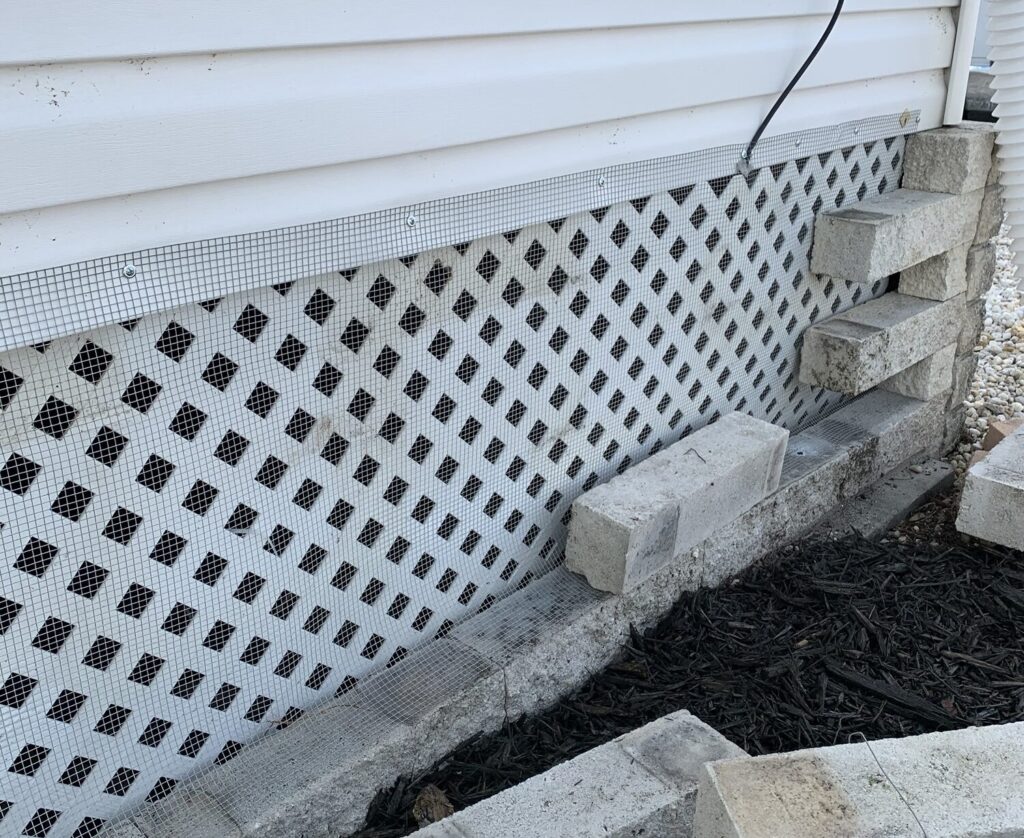
This Redington Beach mobile home features a ¼‑inch galvanized hardware cloth barrier—either buried or tap‑conned into concrete, based on foundation—and sealed soffits, attic vents, and ground vents backed with mesh, allowing airflow while blocking wildlife. An optional interior wrap hides the barrier behind skirting for a discreet finish. This system is the only guaranteed way to prevent animal intrusion—far superior to temporary bait methods.
Local Wildlife Conditions in Redington Beach
Redington Beach’s proximity to coastal dunes, tidal wetlands, and subtropical vegetation attracts wildlife. High humidity accelerates material rot and invites rodents. Mobile home foundations with exposed ground venting are particular targets. Permanent exclusion shields homes from both humidity and wildlife damage, keeping interiors safe and dry.
Ready to Protect Your Redington Beach Home?
Book your free inspection now—our complete wildlife defense includes:
- Wildlife and dead animal removal
- Guaranteed hardware cloth barrier (interior or exterior)
- Sealed soffits, attic vents, and ground vents
- Clean-up, insulation replacement, and quarterly maintenance
Redington Beach–Specific FAQs
Only a full hardware cloth barrier (buried, tap‑conned, or interior-wrapped total exclusion), sealed soffits, attic vents, and ground vents protected with cloth backing provide guaranteed prevention.
No. We seal them with ¼‑inch mesh at the back to allow airflow but block wildlife access.
Yes. Coastal debris and moisture attract rodents—they seek shelter and nesting in crawl spaces when not excluded.
Yes. Early removal prevents hidden contamination—meaning no mold, airflow problems, or health hazards.
No. They only address current pests. Without sealed entry, infestations return. Permanent exclusion is the only reliable solution.
Full-service—including wildlife removal, barrier installation, ground vent mesh, vent sealing, carcass removal—ranges from $600–1,500, depending on foundation type and whether you choose interior-wrap.