Hudson Rodent & Wildlife Removal
Hudson rodent and wildlife removal is essential for mobile home owners
If you’re dealing with rats, raccoons, or other wildlife around or under your mobile home, you’re not alone. Hudson rodent and wildlife removal is a common necessity due to the area’s humid climate, dense vegetation, and high concentration of mobile and manufactured homes. These structures often have vulnerable crawl spaces, unsealed soffits, or aging attic vents—perfect entry points for unwanted animals. Our team specializes in protecting Hudson homes by sealing out pests, removing wildlife, and addressing dead animal odors before they become health risks.
Send Us A Message
Why Hudson Homes Are Susceptible to Wildlife Intrusion
- The warm and humid coastal climate of Hudson keeps wildlife active year-round.
- Attics and soffits of older homes are often degraded or unscreened, which allows access to nesting wildlife.
- Crawl spaces beneath mobile homes are usually unsealed, creating ideal habitat for rats and raccoons.
- In areas with concrete foundations, we use tap‑conned hardware cloth instead of buried mesh for effective exclusion.
Wildlife We Handle in Hudson—Especially in Soffits & Attics
| Animal | Entry Method | Risks & Behavior |
|---|---|---|
| Rats & Mice | Skirting gaps, soffits, crawl space | Chew wiring, nest in insulation |
| Raccoons/Opossums | Attic vents, soffit cracks | Tear insulation, nest overnight (common in attics) |
| Squirrels | Roof vents, soffits | Nest in attic, damage wiring |
| Bats & Snakes | Roof soffits, attic vents | Require legal, one-way exclusion methods |
| Armadillos | Tunnel under structure (if soil allows) | Undermine piers or foundation |
| Dead Animal Carcasses | Under the home or crawl space | Cause odors, attract flies and secondary pests |
Recognizing Signs of Wildlife & Odor Issues
- Hearing scratching, gnawing or scuttling in the attic or crawl after dark
- Discovering fresh soil or burrow holes near skirting or foundation
- Noticing damaged soffits, nesting in attic insulation, or chewed wiring
- Smelling persistent odors in crawl spaces—suggesting a carcass
- Seeing wildlife under your mobile home or near attic openings
Our 7-Step Hudson Wildlife & Dead Animal Removal Process
- Inspection: Full assessment of skirting, crawl space, attic, soffits, vents, and foundation.
- Wildlife Removal: Humane trapping or one-way exclusion devices depending on species.
- Dead Animal Removal: Locate and remove carcasses under the home or attic, then sanitize.
- Soffit & Attic Repair: Seal all entry points, replace damaged panels, install vent screening.
- Hardware Cloth Installation: ¼-inch galvanized mesh either buried or tap‑conned into concrete; both methods block animals effectively.
- Sealing & Restoration: Patch utility lines, secure vent openings, clean insulation, and disinfect affected areas.
- Maintenance & Follow-Up: Quarterly barrier inspection, attic/skirt checks, and homeowner prevention guidance.
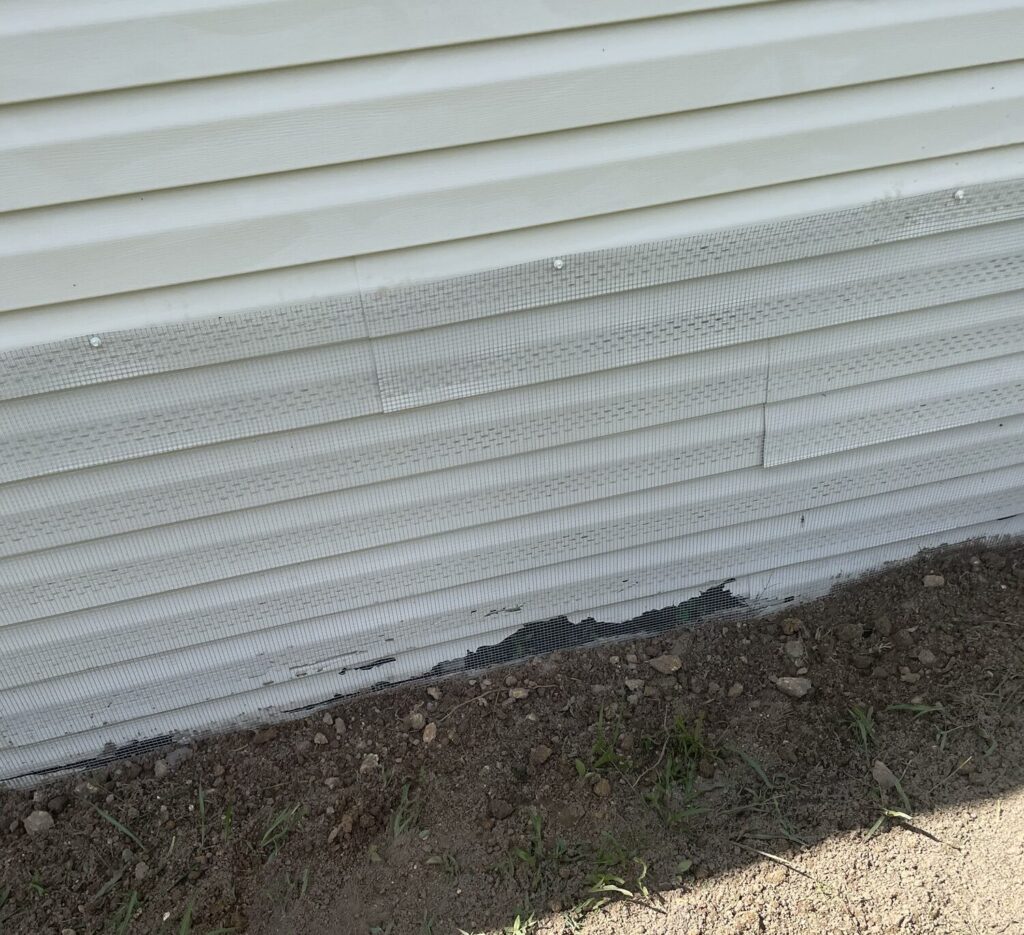
This Hudson mobile home features a quarter‑inch galvanized hardware cloth barrier securely tap‑conned into the concrete`, eliminating the need for burial where ground access isn’t feasible. The cloth blocks rats, raccoons, squirrels, and armadillos from entering beneath the structure, while sealed soffits and attic vents prevent entry into upper areas. Homeowners often worry about visibility—but the installation is almost invisible once complete, blending seamlessly with the exterior and preserving curb appeal.
Why Our Method Works in Hudson
- Tap‑conned mesh vs. buried mesh: concrete-fastened hardware cloth is just as effective in keeping out burrowing animals—even when burial isn’t possible.
- Dead animal removal eliminates odor and secondary pest problems before they escalate.
- Attic and soffit sealing prevents climbing animals from entering upper areas.
- Species-sensitive removal ensures legal compliance, especially for bats and snakes.
- Follow-up visits help prevent reinvasion and protect your investment.
Local Hudson Project Spotlight
A mobile home on a concrete pad near Hudson Hills experienced persistent rodent activity and a foul odor. After removing the carcasses under the skirting and tap‑conning the hardware cloth along the concrete foundation, plus sealing soffits and vents, the odor disappeared and wildlife did not return for over six months.
FAQs about animals under mobile homes
Start by identifying how the animal got in. Then use humane traps or one-way exclusion devices to remove them. Once the space is cleared, install a ¼-inch hardware cloth barrier, either buried or tap-conned to the foundation, to prevent them from coming back.
Locate and remove the carcass as soon as possible. After removal, clean the area using enzyme-based deodorizers or disinfectants to eliminate lingering smells. If you can’t reach the animal, odor-neutralizing bags or foggers can help manage the smell temporarily.
Raccoons are strong and persistent, so you’ll need to use cage traps or exclusion devices. After removal, reinforce skirting and install a buried or concrete-fastened hardware cloth barrier to block re-entry. It’s also important to remove any food or shelter sources that attracted them.
If you can access the area, wear gloves and remove the carcass carefully. Bag and dispose of it according to local regulations. Clean and disinfect the area thoroughly. If it’s inaccessible, contact a wildlife removal expert to avoid health hazards and lingering odors.
If the source of the smell can’t be located, professional wildlife technicians may use thermal imaging or odor detection tools to pinpoint the location. In the meantime, use odor-absorbing materials like activated charcoal, ozone machines, or professional-grade neutralizers.