Land O Lakes Rodent & Wildlife Removal
Mobile Home, Crawl Space, Attic & Soffit Wildlife Protection
Land O Lakes Rodent & Wildlife Removal Is Vital for Mobile Home Owners
Land O Lakes rodent and wildlife removal is essential for mobile homeowners, because local wildlife—especially rats, raccoons, squirrels, and armadillos—often invade via crawl spaces, soffits, or poorly sealed attics. This area’s wooded terrain, warm climate, and dense mobile home communities increase the risk of wildlife intrusions year-round.
Send Us A Message
Why Mobile Homes in Land O Lakes Are Vulnerable
- Rapidly growing residential areas with many mobile home communities featuring open under-skirt crawl spaces.
- Moist, wooded environment attracts burrowing and climbing wildlife.
- Loose landscaping and soil allow animals to dig beneath piers or enter through soffits.
- Aging structures and gaping soffits invite attic and crawl-space infestations.
Wildlife Species Commonly Encountered
| Wildlife | Entry Point | Risk & Impact |
|---|---|---|
| Rats & Mice | Under skirting, soffits, vents | Gnaw wires, spread disease, nest under insulation |
| Raccoons/Opossums | Soffits, crawl space, foundation | Tear insulation, disturb soffits, create nests |
| Armadillos | Tunnel under crawl space | Undermine foundation piers, cause erosion |
| Squirrels | Attic vents, soffits | Chew wiring, build nests in attic |
| Bats & Snakes | Vents or gaps into rooflines | Enter attics; removal requires seasonal, legal methods |
| Birds/Skunks | Soffits or underside of decks | Nesting leads to odor, droppings, and structural damage |
Warning Signs You Need Professional Help
- Rustling or gnawing in walls, crawl spaces, or attic at night.
- Fresh burrow holes or soil piles near skirting or foundation.
- Damaged soffits or holes in wiring or insulation.
- Odors or visible droppings under the home or in attic.
- Wildlife seen under mobile homes or near vents during early evening.
Our 7-Step Mobile-Home Exclusion & Removal Process
1. Thorough Property Survey
We inspect crawl spaces, skirting, attic openings, soffits, roof vents, and utility entries to assess damage and entry points.
2. Species-Specific Removal
- Rodents: Snap or live traps and baiting
- Raccoons/Opossums/Armadillos: Humane cage trapping and relocation
- Squirrels/Bats/Snakes: One-way exclusion devices timed for legal compliance
3. Attic & Soffit Restoration
We repair torn or missing soffits, reinforce vent covers, and eliminate possible attic entry points.
4. Hardware Cloth Barrier Installation
We install durable ¼-inch galvanized hardware cloth in an L‑shape, buried 8–10 inches deep to block burrowing and entry under skirting.
5. Skirting & Foundation Sealing
Utility lines, panel gaps, and crawl access are all sealed and reinforced to prevent wildlife re-entry.
6. Deep Clean & Insulation Restoration
We remove any contaminated insulation, sanitize the space, and replace it if needed to ensure safety and energy efficiency.
7. Routine Maintenance & Follow-Up
Quarterly inspections, landscape guidance, and barrier checks help ensure long-term exclusion and peace of mind.
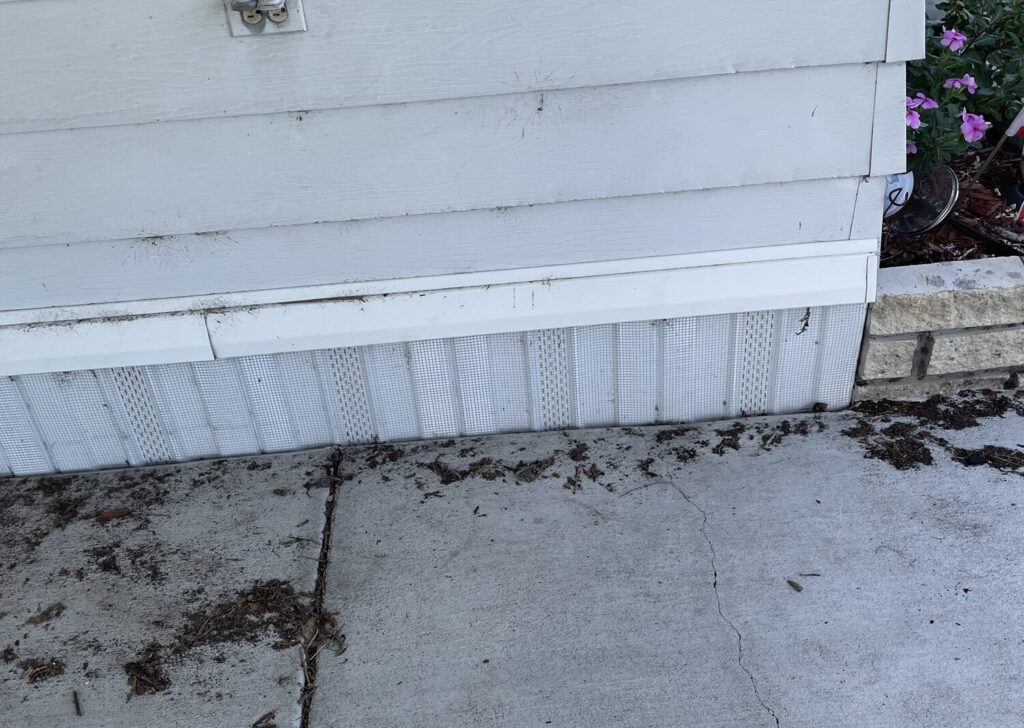
This Land O Lakes mobile home is secured with ¼-inch hardware cloth, tap-conned directly into the concrete slab instead of being buried. This method is especially effective where digging isn’t feasible. The rigid attachment blocks rodents, raccoons, and other wildlife from accessing the crawl space while maintaining a clean, low-profile finish. It’s a durable, animal-proof solution ideal for concrete perimeters or slab foundations.
Why This Approach Works in Land O Lakes
- Buried barrier design prevents digging by rats and armadillos before they can reach the home.
- Attic and soffit sealing closes off common wildlife entry points.
- Species-aware removal ensures humane and legal treatment, especially for bats.
- Comprehensive cleaning prevents health hazards from droppings or nesting.
- Ongoing maintenance reduces recurrence and protects your investment.
Example Case: Mobile Home Park Near Cypress Creek
Challenge: Persistent gnawing sounds under the mobile home, with rats confirmed in the crawl space.
Solution:
- Trapped and removed rodents.
- Installed a buried hardware cloth barrier.
- Soffits were resealed to block attic access.
- Completed cleaning and insulation replacement.
Result: No rat activity reported after 6 months, and homeowner reassurance restored.
FAQs About Animals Under Mobile Homes
The most effective way is to trap and safely remove the animal, then install a buried barrier—typically ¼-inch hardware cloth—around the mobile home’s foundation. This prevents animals like rats, raccoons, and armadillos from returning. It’s also important to seal off any gaps, holes, or utility line openings they may have used.
First, locate and remove the carcass if possible. Then sanitize the area with odor-neutralizing products or enzyme-based cleaners. If removal isn’t possible, specialized odor-blocking bags or neutralizing foggers can help manage the smell until it dissipates naturally.
Rodent-proofing involves sealing all access points with durable materials like steel wool or metal flashing and installing a ¼-inch hardware cloth barrier, buried 8–10 inches around the entire base of the home. Additionally, vents and soffits should be screened and secured to prevent climbing entry.
Common intruders include rats, mice, raccoons, opossums, armadillos, snakes, squirrels, and occasionally skunks or feral cats. These animals are drawn to the shelter, warmth, and easy entry points found under mobile homes.
The odor can last from a few days to several weeks, depending on the size of the animal, heat, humidity, and air circulation. In Florida’s climate, the smell may linger longer unless the carcass is removed and the area is sanitized.
If you suspect a dead animal but can’t locate it, check attics, crawl spaces, soffits, and under the home. A wildlife technician can help pinpoint the source with thermal imaging or odor detection tools. Once located, removal and deodorizing the area will usually resolve the issue.