
Holiday, Florida is a suburb of the Tampa–St. Petersburg–Clearwater metropolitan area, with approximately 22,000–25,000 residents living across 5.3 mi² in west central Pasco County. Housing types include suburban homes, waterfront properties near the Anclote River, mobile home parks, and mid-century ranch houses. The area’s warm, humid subtropical climate—with hot, wet summers and mild winters—plus nearby parks, waterways, and sandy soils creates an ideal environment for many wildlife and rodent species. This page covers humane wildlife removal, exclusion methods, structure repairs, and long-term prevention for local homeowners.
Common Wildlife and Rodents in Holiday
Rodents
Norway rats & roof rats: occupy attics, foundations, walls, and under mobile homes; known for gnawing and droppings .
House mice & deer mice: nest in insulation, walls, and crawlspaces.
Wildlife
Raccoons & opossums: nocturnal nesters in attics, soffits, crawl areas.
Squirrels: chew through wiring and insulation.
Bats: roost in attic spaces and behind siding; protected species.
Armadillos: common burrowers, especially under raised decks or homes.
Snakes: enter following rodent prey in crawlspaces.
Birds: nest in eaves, chimneys, vents.
Occasional larger wildlife: such as alligators around waterways and occasional sightings of gopher tortoises in sandy soils.
How Animals Enter Homes and Hide
Wildlife invades structures through several key entry points:
- Attics & soffits: Broken soffit boards or gable vents.
- Roof vents & chimneys: Missing caps or unsecured openings.
- Crawl spaces & mobile home skirting: Gaps in skirting and foundation vents.
- Foundation cracks & wall penetrations: Entry for smaller rodents.
- Ground openings: Burrowing under supports, decks, and porches.
These vulnerabilities allow animals to nest within attic spaces, wall cavities, under floors, and beneath homes.
Wildlife Under Mobile Homes & Crawl Spaces
Raised homes and mobile structures are especially vulnerable due to:
- Damaged or missing skirting, allowing open access.
- Animals attracted to crawl spaces as they provide warmth and shelter.
- Burrowers like armadillos causing soil instability and weakening supports.
- Health risks from droppings, insulation contamination, and chewed utilities.
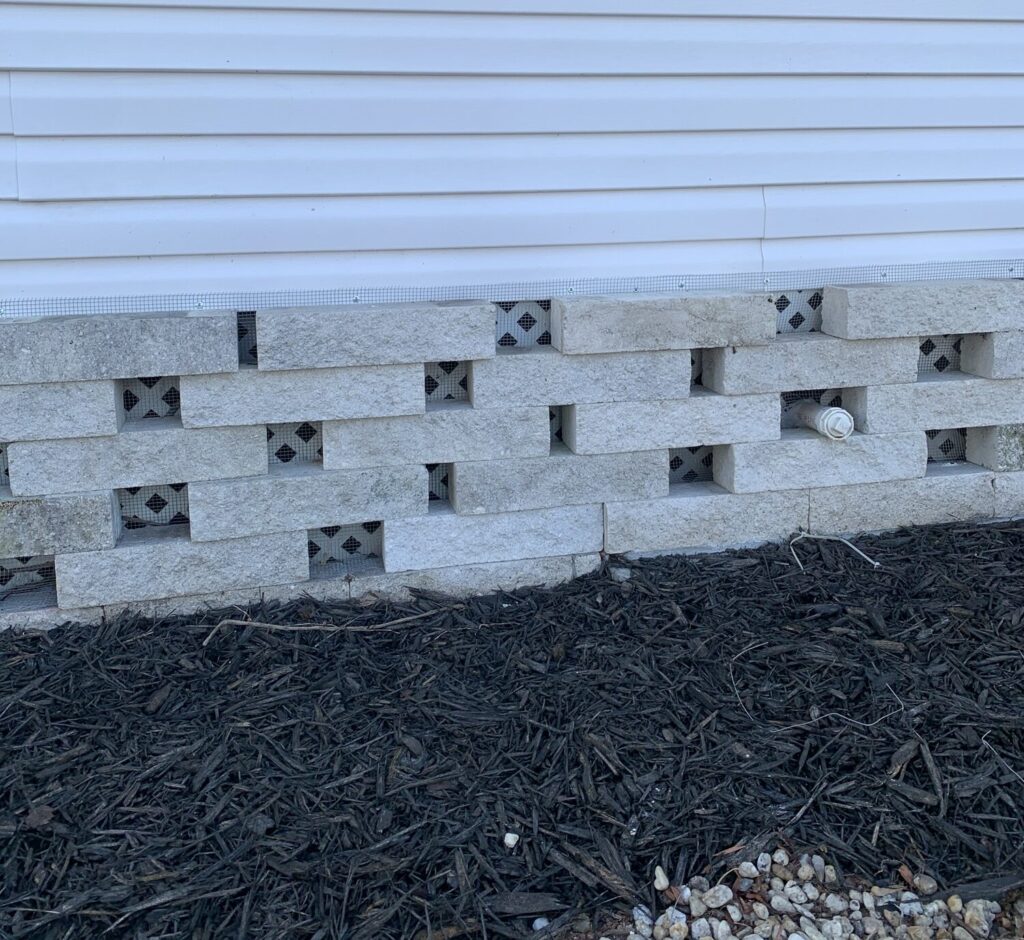
Wildlife exclusion done in Holiday, FL: mobile home secured with ¼-inch galvanized hardware cloth barrier, wrapped and buried to block raccoons, rats, armadillos, and other intruders.
Humane Removal & Permanent Exclusion Process
1. Site Inspection
A thorough assessment includes looking for droppings, nests, tracks, chew marks, and identifying active species and entry points.
2. Humane Removal Techniques
- Cage trapping for raccoons, opossums, armadillos.
- One-way exclusion doors for animals like bats and squirrels, installed seasonally.
- Rodent trapping & sealing to prevent further rodent infestation.
3. Structural Repairs
- Secure soffits, fascia boards, and gable vents.
- Cap roof vents and chimney openings.
- Seal foundation and crawl vents with sturdy mesh or hardware cloth.
4. Hardware Cloth L‑Barrier System
- Use ¼–½″ galvanized hardware cloth around skirting or perimeter.
- Install it in an L‑shape and bury at least 8 inches deep to prevent burrowing entry .
- Secure to pier supports and foundation edges for lasting protection.
5. Skirting and Crawl Space Reinforcement
- Replace or secure damaged skirting panels.
- Seal utility openings with durable materials and hardware cloth.
6. Cleanup & Restoration
- Remove contaminated insulation and nesting materials.
- Clean, disinfect, repair chewed wiring and vents.
- Reinstate vapor barriers in crawlspaces and restore affected areas.
Why Holiday’s Geography and Housing Invite Wildlife
Climate & Ecosystems
Holiday has a typical Florida subtropical climate: long, hot, humid summers, with mild winters and frequent rainfall. Summers often reach average daily highs near 89 °F, creating ideal conditions for wildlife activity.
Housing Mix
The area features homes on slabs, raised crawl spaces, mobile homes with open skirting, and waterfront houses. Skirting gaps or damaged soffits become easy access points.
Proximity to Water & Nature
Holiday is near natural areas such as Anclote River Park, Pasco Palms Preserve, and nearby beaches. These green spaces provide corridors for wildlife like raccoons, rodents, and armadillos.
Sandy Soil
The region’s sandy, limestone-rich soil is easy for burrowing animals like armadillos and rodents, especially under structures and skirting.
Yes. With Holiday’s mix of mobile homes, older slab homes, and proximity to parks and waterways, wildlife activity is common. Raccoons, rodents, bats, and armadillos are frequently reported in attics, crawl spaces, and under mobile homes.
Definitely. Homes near water attract snakes, rodents, and raccoons looking for food and shelter. Waterfront areas are more exposed to burrowing and nesting activity.
Scratching at night usually means nocturnal animals like rats, raccoons, or opossums are active in your attic or crawl space. Avoid blocking any holes yourself—this may trap them inside. A professional inspection is the best next step.
Open or damaged skirting, gaps near utility lines, and eroded soil give easy access to animals like armadillos and raccoons. These structures often sit just high enough off the ground to provide shelter and warmth.