Pinellas Park Rodent & Wildlife Removal
Mobile Home, Crawl Space, Attic/Soffit & Dead Animal Removal Experts
Pinellas Park rodent and wildlife removal: your key to long-term protection
Pinellas Park rodent and wildlife removal is essential for homeowners—particularly those with mobile homes—due to the region’s warm coastal climate, wooded surroundings, and lingering rat infestation. Pinellas County is so rat-prone that some municipalities offer free outdoor bait stations, but baiting alone doesn’t stop wildlife access into homes. Traps may catch animals temporarily, yet without a secure barrier, they’ll return. A hardware cloth barrier—buried or concrete-mounted—is the only guaranteed solution to prevent future intrusions. We also specialize in dead animal removal from under mobile homes, critical for odor control and biohazard safety.
Send Us A Message
Wildlife Intruding Your Pinellas Park Mobile Home
| Animal | Entry Points | Damage / Health Risk |
|---|---|---|
| Rats & Mice | Crawl space gaps, soffits, vents | Gnaw wires, nest in insulation, spread disease |
| Raccoons & Opossums | Under decking, attic vents, soffits | Tear insulation, damage wiring, nesting intrusion |
| Squirrels | Soffits, attic voids | Nest in attic, chew wiring, fire hazard |
| Bats & Snakes | Roof / soffit openings, vents | Legal exclusion needed; guano hazard |
| Armadillos | Burrow under skirting or piers | Undermine foundation stability |
| Dead Animals | Under structure or crawl space | Cause smell, attract pests, health risk |
Local services confirm Pinellas Park residents frequently call for removal of these species and the associated damage caused under mobile homes and attics.
Additional Wildlife Pressure in Pinellas Park
Pinellas Park, with over 53,000 residents in central Pinellas County, lies within a dense suburban grid surrounded by greenbelt corridors and drainage canals. Its low-lying limestone-substrate terrain makes digging easy for burrowing animals like armadillos and rats, while nearby wooded lots and old mobile home communities invite attic and soffit invaders like squirrels, raccoons, and opossums .
7-Step Pinellas Park Wildlife Exclusion & Cleanup Approach
- Comprehensive Inspection
Evaluate skirting, crawl space, soffits, attic penetrations, vents, and concrete foundation edges. - Humane Wildlife Removal
Use traps or exclusion devices depending on species, with safe relocation practices. - Dead Animal Removal & Deodorization
Safely extract carcasses under mobile home or attic, sanitize the area thoroughly, and use enzyme treatments as needed. - Soffit & Attic Sealing
Repair damaged soffits, cap vents, reinforce fascia, and install mesh where needed. - Hardware Cloth Barrier Installation
Secure ¼-inch mesh barrier either buried 8–10 inches or tap‑conned into concrete, offering guaranteed exclusion—even when bait is gone. - Foundation & Skirting Sealing
Close openings around piers, utility lines, and soffits. Install skirting repairs or reinforcement. - Cleanup, Insulation Restoration & Maintenance
Remove contaminants, disinfect, replace insulation, and plan quarterly checks to sustain protection.
With this method, hardware cloth barrier is the only guaranteed way to keep animals from entering—unlike bait boxes or one-time traps that offer no lasting exclusion.
What Makes This Approach Trustworthy in Pinellas Park
- Agencies in Pinellas County handle rabid wildlife and bait station placement—but only home exclusion prevents structural re-entry.
- Bait boxes capture current wildlife but don’t stop new intruders. Hardware cloth barrier physically blocks invaders year-round.
- Attic and soffit sealing ensures no climbing entry.
- Removing dead animals and sanitizing prevents lingering odor, bacteria, and pests.
- We follow all Florida Fish & Wildlife rules for ethical removal and exclusion methods.
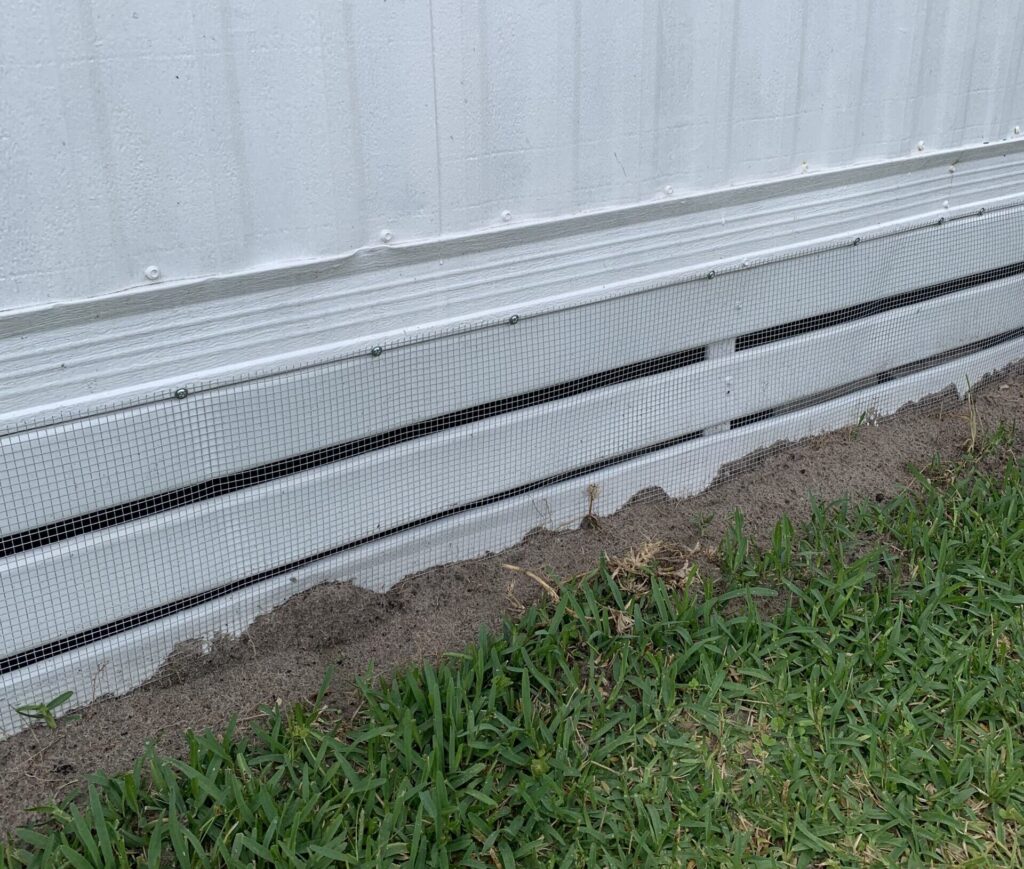
This Pinellas Park mobile home features a quarter‑inch galvanized hardware cloth barrier directly tap‑conned into the concrete foundation, ideal where burial isn’t feasible. Soffits and attic vents are sealed to prevent entry from rats, squirrels, raccoons, and bats—especially critical in older homes. The system is nearly invisible once installed, preserving exterior appearance while delivering the only guaranteed way to keep animals out, far surpassing bait boxes or traps.
Local Project Snapshot
A mobile home near 86th Avenue south had frequent rat activity and foul odors under the flooring. After removing nesting rats and possible carcasses, we tap‑conned the hardware cloth along the concrete foundation, sealed soffits and attic vents, and replaced contaminated insulation. The result: no recurrence of wildlife or odor for over eight months.
Next Steps for Permanent Protection
Don’t rely on bait or temporary trapping—secure your Pinellas Park home with the only proven method: a buried or concrete-mounted hardware cloth barrier plus soffit and attic sealing. Schedule your complimentary inspection now to address wildlife removal, odor control, and full exclusion solutions.