Shady Hills Rodent & Wildlife Removal
Mobile Home Wildlife Exclusion • Dead Animal Removal • Soffit & Attic Protection
Why Shady Hills rodent and wildlife removal matters
Shady Hills lies in northern Pasco County near open woodland, lowland swamps, and rural roadways—ideal for wildlife migration. Many mobile homes in the area have exposed crawl spaces, unsafe soffits, and ventilated attics—providing easy access for rats, raccoons, squirrels, opossums, bats, snakes, and armadillos. While traps or bait stations might temporarily remove wildlife, they do not prevent future intrusion. The only guaranteed method involves sealed soffits/attic vents plus a ¼‑inch hardware cloth barrier—installed buried, concrete‑mounted (tap‑conned), or with an interior wrap behind skirting—alongside dead animal removal from under mobile homes to address odors and safety.
Send Us A Message
Wildlife Commonly Invading Shady Hills Mobile Homes
- Rats & Mice – access crawl spaces and vent gaps, gnawing insulation
- Raccoons & Opossums – climb into soffits or hidden crawl openings
- Squirrels – enter attic vents and cause nesting damage
- Bats & Snakes – slip through gaps in soffits or roofline
- Armadillos – burrow under homes, destabilizing structures
- Hidden Carcasses – lead to decomposition odor and pest attraction
With seasonal rains and dense vegetation, wildlife pressure in Shady Hills is constant and unpredictable.
Signs You May Have Wildlife Under or In Your Home
- Nighttime sounds of scratching, scurrying, or gnawing under or in the attic
- Dirt or burrow entrances around crawl space skirting or piers
- Torn soffits, missing vent covers, or chewed insulation
- Persistent foul odor under the mobile home—possibly from a carcass
- Sightings of wildlife around vents or beneath the structure
Our 7‑Step Shady Hills Wildlife Exclusion & Cleanup Process
- Comprehensive Inspection
We assess soffits, attic vents, crawl areas, and foundation using borescopes and thermal cameras. - Humane Wildlife Removal
Live-trapping or one-way exit systems are used per species, complying with state and local wildlife regulations. - Dead Animal Removal & Sanitization
We find and remove carcasses from under the home, then clean and deodorize the area for health safety. - Soffit & Attic Sealing
Damaged vents, panels, and fascia are repaired or replaced with secure screening. - Hardware Cloth Barrier Installation
• Buried mesh in soil crawl spaces (8–10″ depth)
• Tap‑conned mesh for concrete-slab foundations
• Interior wrap option hidden behind skirting (premium choice) - Skirting & Utility Seal-Up
Gaps around utility lines, vents, and foundation piers are sealed; skirting reinforced. - Final Cleanup & Ongoing Maintenance
We replace soiled insulation, sanitize surfaces, and schedule quarterly inspections to maintain barrier integrity.
This full exclusion system offers permanent protection, unlike bait stations or traps, which only address current wildlife presence.
Why Our Approach Works in Shady Hills
- Total exclusion: hardware cloth resists gnawing, digging, and climbing
- Year-round protection: sealed soffits and vents prevent seasonal insect and animal entry
- Safety-first: removing dead animals eliminates odor, mold, and pest risks
- Clean aesthetic option: interior wrap preserves curb appearance without sacrificing security
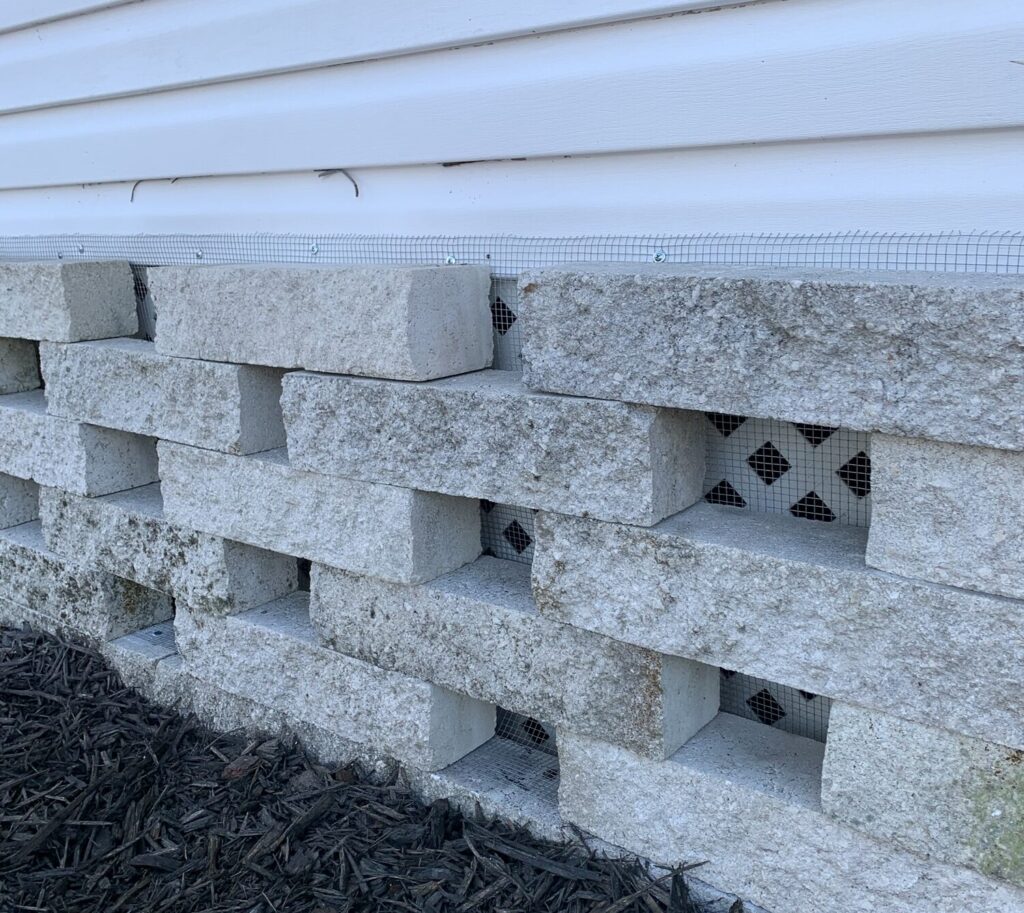
This Shady Hills mobile home features a ¼‑inch galvanized hardware cloth barrier—installed either buried in soil or tap‑conned into concrete, depending on foundation type—alongside sealed soffits and attic vents. It blocks wildlife such as rats, raccoons, squirrels, bats, snakes, and armadillos. Homeowners can opt for** interior wrap behind skirting** at extra cost to maintain aesthetics. This combined solution is the only guaranteed way to prevent re-entry, outperforming traps or bait boxes.
Wildlife in Shady Hills
Shady Hills’ proximity to rural roads, woodlands, and wetlands attracts wildlife constantly—especially after heavy rain or in breeding seasons. Mobile homes in this setting need permanent exclusion systems to stay wildlife-free and structurally sound.
Shady Hills–Targeted FAQs
A continuous ¼‑inch hardware cloth barrier—installed buried, tap‑conned, or with interior wrapping—combined with sealed soffits and attic vents guarantees wildlife exclusion.
Yes. Rodents flourish near wooded and wet areas around mobile homes. Exclusion is essential for prevention.
Carcasses cause foul odors, mold, attract insects, and degrade air quality—prompt removal is vital for health and sanitation.
No. Without a physical barrier, wildlife will return—even after removal—making hardware cloth exclusion necessary.
Complete services—wildlife removal, hardware cloth installation, attic/soffit sealing, and odor cleanup—typically range from $600 to $1,500, depending on foundation and chosen barrier option.