St Leo Rodent & Wildlife Removal
Mobile Home Wildlife Exclusion • Dead Animal Removal • Soffit & Attic Protection
Why St Leo rodent and wildlife removal matters
St Leo, nestled near rolling pastures and hardwood forests in Pasco County, includes numerous mobile and manufactured homes built on piers and slabs with exposed crawl spaces, soffits, and attic vents. These access points invite wildlife—rats, raccoons, squirrels, opossums, bats, snakes, and armadillos—to nest or burrow under structures. Bait stations or traps offer only temporary solutions, not protection. The only long-term fix is sealing soffits and attic vents, plus a ¼‑inch hardware cloth barrier—installed buried, concrete‑mounted (tap‑conned), or via an interior wrap behind skirting—with included dead animal removal from under mobile homes for odor and health safety.
Send Us A Message
Common Wildlife Intruders in St Leo Mobile Homes
- Rats & Mice – access crawl areas, vents; damage insulation
- Raccoons & Opossums – climb through soffits or crawl-space openings
- Squirrels – nest in attic vents and cause wiring damage
- Bats & Snakes – squeeze through soffits or roofing gaps
- Armadillos – burrow under skirting, causing structural issues
- Hidden Carcasses – decomposition under homes draws pests and odor
Seasonal rains and woodland proximity make wildlife access common throughout the year.
Signs You Might Have Wildlife Under or In Your Home
- Rustling, gnawing, or scraping sounds in crawl spaces or attics
- Fresh dirt, tunnels, or burrow openings by skirting or foundation
- Torn soffits, exposed insulation, or debris in vents
- Persistent bad odor under the home—indicating carcasses
- Sightings of wildlife near vents, crawl access, or home perimeters
Our 7‑Step St Leo Wildlife Exclusion & Cleanup Process
- Inspection
We use borescopes and thermal cameras to assess crawl spaces, soffits, vents, and foundation lines. - Humane Wildlife Removal
Live trapping or one-way exits are used for each species, following wildlife regulations. - Dead Animal Removal & Sanitization
Carcasses under the home are safely removed, then enzyme-treated and deodorized to eliminate health risks. - Soffit & Attic Sealing
We repair or replace damaged vents, soffit panels, and fascia to block wildlife entry. - Hardware Cloth Barrier Installation
Options based on foundation:- Buried mesh (8–10″) for soil crawl spaces
- Tap‑conned mesh into concrete slabs
- Interior wrap behind skirting for a clean appearance (premium add‑on)
- Skirting & Utility Seal-Up
All gaps around pipes, vents, and piers are sealed and skirting is reinforced. - Cleanup & Maintenance
Contaminated insulation is replaced, areas sanitized, and quarterly inspections scheduled for continued protection.
This permanent system is far superior to traps or bait stations, which don’t block wildlife access.
Why This Approach Works in St Leo
- Guaranteed exclusion—hardware cloth can’t be chewed or burrowed through
- Year-round defense—sealed soffits and vents block wildlife entry
- Health-first strategy—dead animal removal prevents odor, mold, and pests
- Neat aesthetics—optional interior wrap hides the barrier for seamless curb appeal
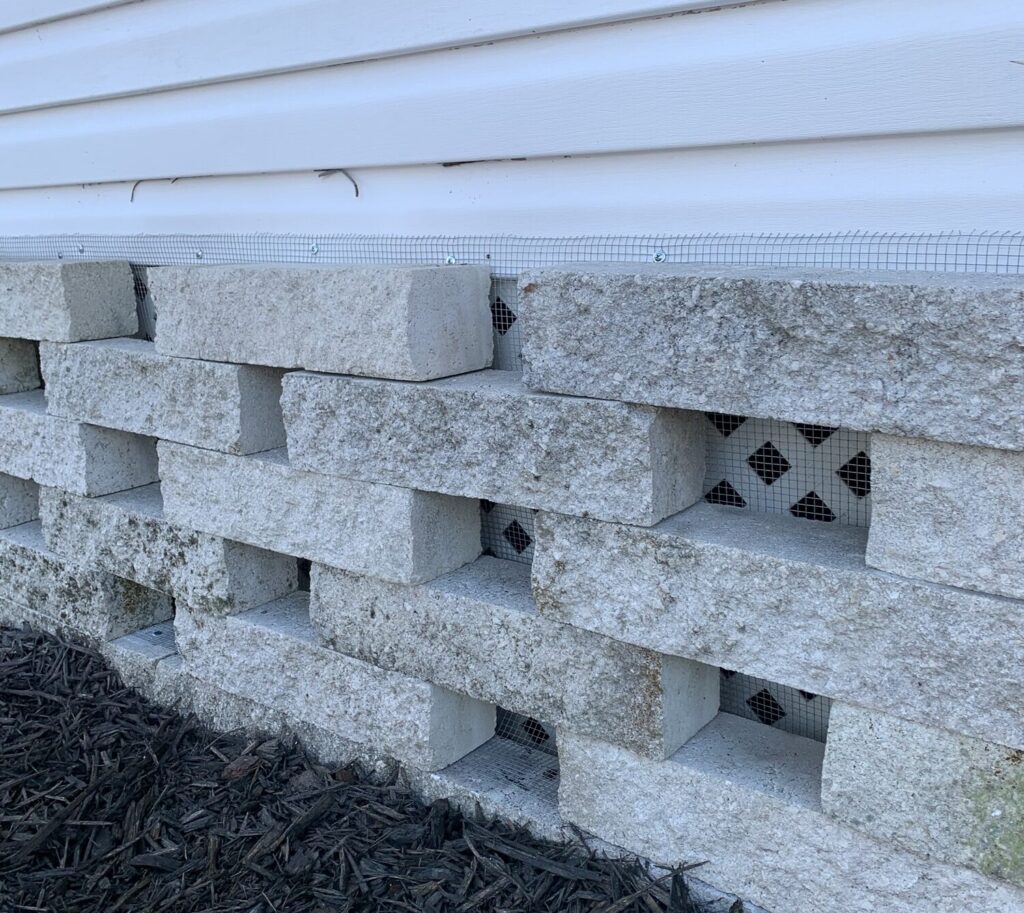
This St Leo mobile home features a ¼‑inch galvanized hardware cloth barrier—installed either buried in soil or tap‑conned into concrete, as appropriate for the foundation. Combined with sealed soffits and attic vents, it blocks wildlife—like rats, raccoons, squirrels, bats, snakes, and armadillos—from entering under and above. An optional interior wrap hides the mesh behind skirting for a clean appearance at extra cost. This system offers the only guaranteed method to prevent wildlife from re-entering—far superior to bait boxes or traps.
Local Context: Wildlife in St Leo Area
Surrounded by wooded farmland and wetlands near Withlacoochee River tributaries, St Leo properties face persistent wildlife intrusion risks—especially during rainy or breeding seasons. Mobile homes with exposed crawl spaces require structural exclusion to protect occupants and property.—
St Leo–Targeted FAQs
A continuous ¼‑inch hardware cloth barrier—installed buried, tap‑conned into concrete, or wrapped inside—combined with sealed soffits and attic vents provides guaranteed exclusion.
Yes. The mix of woodlands, farmland, and moist ground encourages rodent nesting beneath foundations.
Absolutely. Carcasses can cause foul odor, mold, pest attraction, and health risks—prompt removal is essential.
No. Only a hardware cloth barrier blocks wildlife access—even after removal, animals will return without exclusion
A full service—removal, barrier installation, attic/soffit sealing, odor cleanup—typically costs $600–1,500, depending on foundation type and whether you choose the interior wrap option.