St. Pete Beach Rodent & Wildlife Removal
Mobile Home Wildlife Exclusion • Dead Animal Removal from Under Mobile Home • Soffit, Attic & Ground Vent Sealing
Why St. Pete Beach rodent and wildlife removal is vital
St. Pete Beach rodent and wildlife removal protects coastal mobile homes from ongoing wildlife intrusion. Situated on the Gulf barrier with sandy soils and nearby marshes, St. Pete Beach mobile homes are built on pier, slab, or crawl-space foundations. Common features—exposed soffits, attic vents, crawl spaces, and ground vents—provide easy access for wildlife like rats, raccoons, squirrels, opossums, bats, snakes, and armadillos. Traps or bait might temporarily remove wildlife, but they fail to prevent return access. The only fully effective, long-term solution involves sealing soffits, attic vents, and ground vents with ¼‑inch hardware cloth, installing a full perimeter barrier (buried, tap‑conned, or interior-wrapped), and performing dead animal removal from under mobile homes to eliminate odor and preserve safety.
Send Us A Message
Unique Coastal Vulnerabilities in St. Pete Beach
- Pier foundations leave crawl spaces fully exposed to wildlife access
- Ground vents near sandy, moist soil attract burrowing rodents
- Slab foundations often feature utility chase openings around skirting
- Coastal weather accelerates deterioration—making wildlife prevention essential
Wildlife That Invades St. Pete Beach Mobile Homes
Rats & Mice
Rodents slip through ground vents and crawl-space gaps, chew insulation and wiring, and contaminate interiors.
Raccoons & Opossums
Enter through soffit gaps or crawl openings, damage insulation, and leave droppings.
Squirrels
Gnaw on wiring, build nests in attic vents or roof lines—posing fire risks.
Bats & Snakes
Infiltrate through attic, soffit cracks, and vent openings—often without immediate detection.
Armadillos
Dig burrows near slab edges or under skirting, causing structural instability and access.
Dead Animals
Carcasses under homes create powerful foul odors, attract insects, and pose health hazards.
How to Identify Wildlife Problems
- Nighttime Noises – Listen for scratching, gnawing, or rustling near vents, crawlspaces, or attics
- Soil Displacements – Look for small dirt piles by ground vents or skirting
- Structural Tears – Notice missing soffit panel, shredded insulation, or gnawed vents
- Persistent Smells – Lingering odors beneath the home often indicate hidden carcasses
- Animal Sightings – Often spotted around vents or beneath the structure
Ignoring warning signs may lead to insulation damage, electrical hazards, and reduced air quality.
Our 7‑Step St. Pete Beach Wildlife Exclusion & Cleanup Process
- In-Depth Inspection
We inspect soffits, attic and ground vents, crawl spaces, and foundations using borescopes, thermal imagers, and moisture meters. - Humane Wildlife Removal
Live trapping or one-way exits are used per species, following Florida wildlife regulations. - Dead Animal Removal & Sanitization
Hidden carcasses under the mobile home are removed promptly, then enzyme cleaners and odor neutralizers are applied. - Soffit, Attic & Ground Vent Sealing
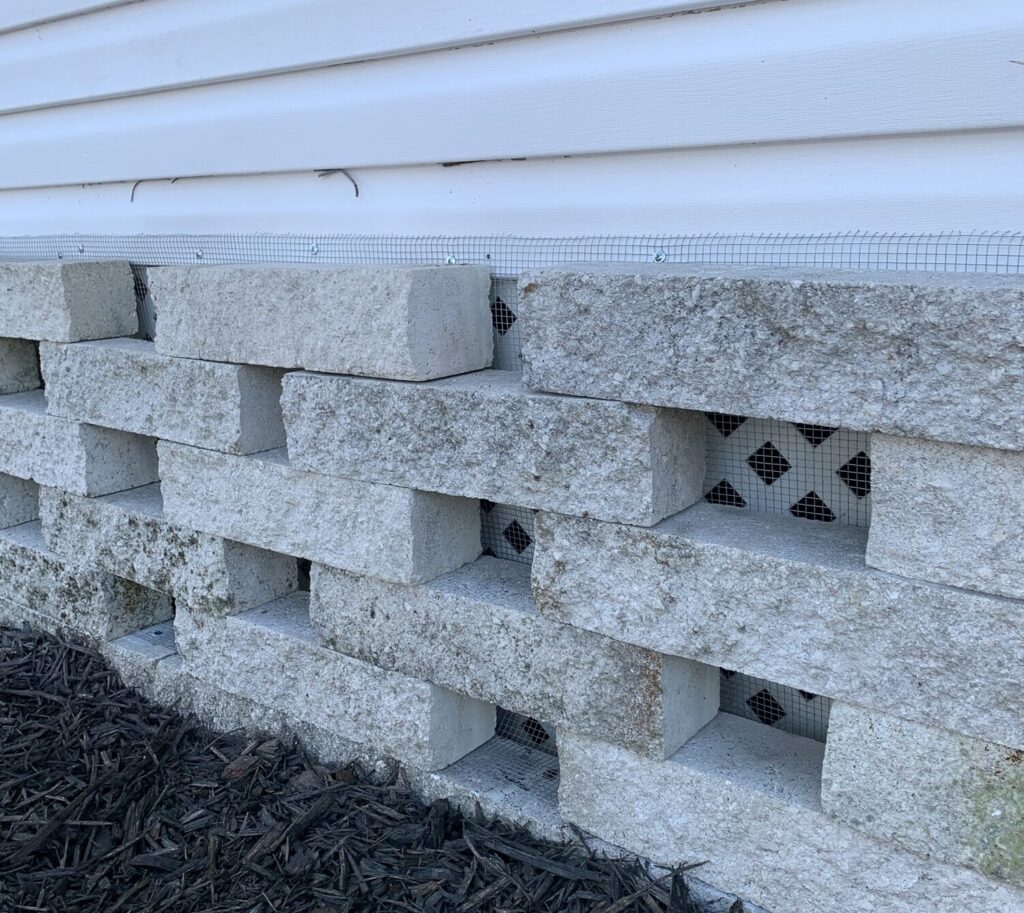
Damaged soffits and attic vents are repaired or replaced. Ground vents are reinforced with ¼‑inch hardware cloth at the back, preserving airflow while blocking animals. - Hardware Cloth Barrier Installation
Barrier method varies by foundation:- Buried mesh (8–10″ deep) for crawl-space homes
- Tap‑conned mesh anchored into concrete slabs
- Interior wrap behind skirting, hidden but effective (premium upgrade)
- Skirting & Utility Seal-Up
All pipe penetrations, vent lines, cables, and skirting are sealed securely with hardware cloth reinforcement. - Final Cleanup & Quarterly Maintenance
Insulation lost to wildlife is replaced, affected areas cleaned and deodorized, and quarterly checks scheduled to uphold barrier integrity.
This comprehensive system ensures permanent wildlife exclusion—beyond any benefit of traps or bait.
Why This Works in St. Pete Beach
- Reliable wildlife exclusion—durable ¼‑inch hardware cloth resists gnawing and burrowing
- Airflow intact—ventilation maintained through mesh-backed ground vents
- Seasonal protection—sealed soffits and vents prevent nesting during vulnerable times
- Health-conscious cleanup—dead animal removal stops mold development, odors, and pest attraction
- Clean aesthetics—interior-wrap option conceals barriers for a polished home exterior
This St. Pete Beach mobile home includes a ¼‑inch galvanized hardware cloth barrier—buried or tap‑conned according to foundation type—with sealed soffits, attic vents, and ground vents backed with mesh to maintain airflow while preventing wildlife. Homeowners may choose an interior wrap behind skirting to hide the barrier. This system is the only guaranteed way to stop pests from intruding—far superior to temporary bait or traps.
Local Wildlife Conditions in St. Pete Beach
With nearby dunes, coastal shrublands, and frequent foot traffic, wildlife intrusion is common—especially in summer months. Coastal humidity accelerates decay; structural sealing protects against both wildlife and material damage. Permanent exclusion is the only lasting defense for mobile homes in this environment.
Book Your Free St. Pete Beach Inspection
Protect your mobile home with our full-service solution:
- Wildlife removal + dead animal extraction
- Guaranteed ¼‑inch hardware cloth barrier (exterior or interior-wrap)
- Sealed soffits, attic vents, and ground vents
- Insulation replacement + space sanitization
- Quarterly maintenance for long-term defense
St. Pete Beach– FAQs
A full exclusion system—¼‑inch hardware cloth barrier (buried, tap‑conned, or interior-wrapped), soffit and attic vent sealing, and ground vents reinforced with mesh backing—provides complete protection.
Yes. We install hardware cloth behind ground vents—maintaining airflow while blocking small animals.
Yes. Local moisture and debris attract rodents; only structural exclusion ensures they stay out.
Absolutely. Even hidden carcasses can cause mold, allergic reactions, and pest issues—removal safeguards health.
No. They only remove current pests. Without sealed entry, wildlife will return. Hardware cloth exclusion is essential for long-term protection.
Full services—including wildlife and carcass removal, barrier and mesh installation, sealing, and optional interior wrap—run $600–1,500, depending on foundation type and options.