Trinity Rodent & Wildlife Removal
Mobile Home Wildlife Exclusion • Dead Animal Removal • Soffit & Attic Protection
Why Trinity rodent and wildlife removal matters
Trinity, located in Pasco County near creeks, wetlands, and wooded areas, hosts many mobile and manufactured homes elevated on piers or slabs. Spaces beneath these homes—crawl areas, soffits, attic vents—offer wildlife like rats, raccoons, squirrels, opossums, bats, snakes, and armadillos a way in. Temporary solutions like traps or bait alone don’t prevent recurring access. The only dependable fix includes sealed soffits and attic vents plus a ¼‑inch hardware cloth barrier—installed buried in soil, tap‑conned into concrete, or via an interior wrap behind skirting—along with dead animal removal from under mobile homes to eliminate odors and health risks.
Send Us A Message
Wildlife Invading Trinity Mobile Homes
- Rats & Mice – enter crawl spaces, vents, chew insulation
- Raccoons & Opossums – squeeze in through soffit cracks or crawl-access points
- Squirrels – nest in attic vents, chew wiring
- Bats & Snakes – access through soffit gaps and roof vents
- Armadillos – burrow under homes, compromising foundation
- Hidden Carcasses – decompose under homes, attracting pests and odors
Wetter seasons and dense vegetation throughout Trinity increase wildlife activity and intrusion risks.
How You Know You Have a Problem
- Nocturnal rustling, gnawing, or scraping sounds from beneath or above
- Fresh soil or small tunnels around skirting or foundation
- Torn soffits, missing vent covers, or insulation damage
- Lingering foul smells under the home—likely from hidden carcasses
- Occasional wildlife sightings near crawl spaces or vents
Our 7‑Step Trinity Wildlife Exclusion & Cleanup Process
- Professional Inspection
We assess crawl spaces, attic vents, soffits, and foundations using borescopes and thermal tools to identify entry points. - Humane Wildlife Removal
Live trapping or one-way exclusion devices are tailored per species, fully compliant with wildlife regulations. - Dead Animal Removal & Sanitization
We safely remove hidden carcasses under the home, then conduct enzyme-based cleaning and deodorization to eliminate odors and health risks. - Soffit & Attic Sealing
Damaged soffits, vent covers, and fascia are repaired or replaced and secured with screening to stop wildlife entry. - Hardware Cloth Barrier Installation
• Buried mesh in soil crawl spaces (8–10″ deep)
• Tap‑conned mesh for concrete or slab foundations
• Interior wrap option behind skirting for a polished finish (premium add-on) - Skirting & Utility Seal-Up
All openings around pipes, vents, and piers are sealed; skirting panels are reinforced to prevent intrusion. - Final Cleanup & Maintenance
We replace contaminated insulation, sanitize the workspace, and schedule quarterly inspections to maintain barrier effectiveness.
This complete solution outperforms traps or bait stations, which merely address existing pests.
Why Our Approach Works in Trinity
- Guaranteed exclusion: hardware cloth resists gnawing and digging
- Comprehensive protection: sealed soffits and vents stop seasonal wildlife entry
- Health-first: immediate removal of dead animals prevents mold, odors, and pests
- Aesthetic option: optional interior wrap keeps the barrier out of sight
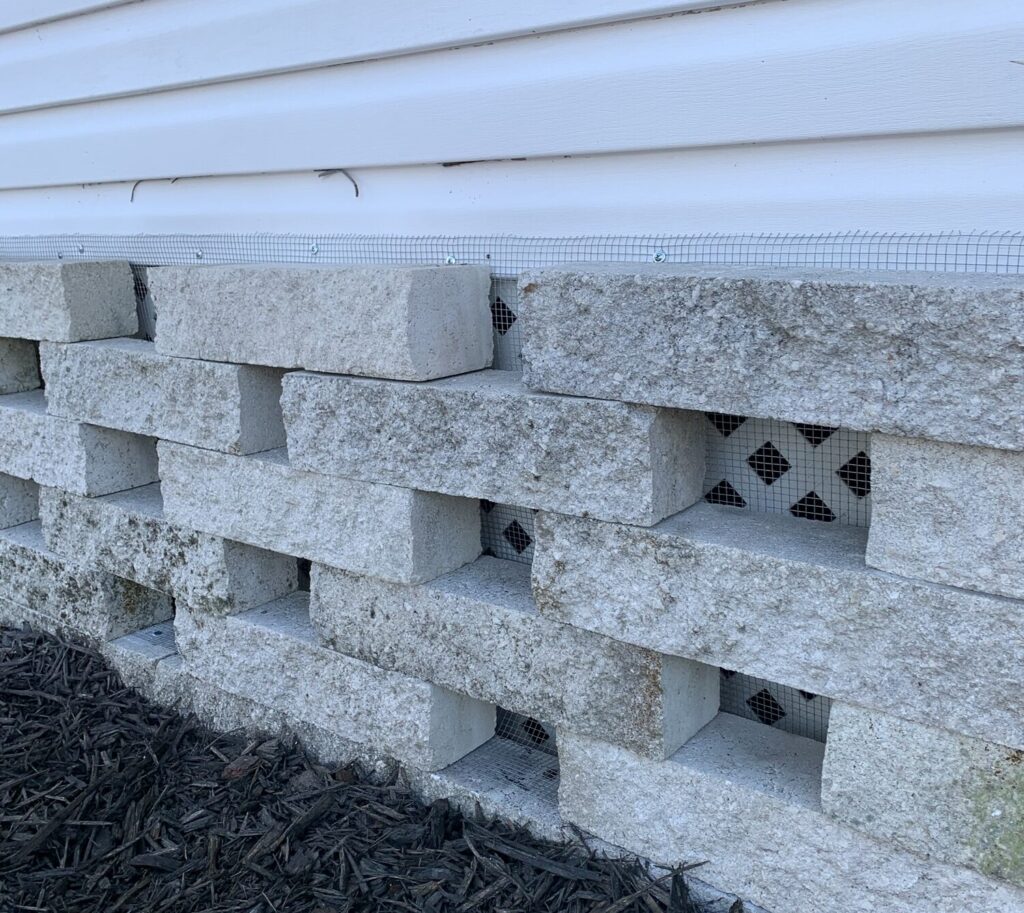
This Trinity mobile home features a ¼‑inch galvanized hardware cloth barrier—installed buried in soil or tap‑conned into concrete, depending on the foundation. Combined with sealed soffits and attic vents, this setup prevents wildlife like rats, raccoons, squirrels, bats, snakes, and armadillos from entering under or above the structure. Homeowners may opt for an interior wrap option, hiding the mesh behind skirting for a tidy and aesthetic look at an additional cost. This system is the only guaranteed way to prevent wildlife re-entry—far exceeding what traps or bait boxes can achieve.
Local Context: Wildlife Conditions in Trinity
Trinity’s proximity to creeks, wetlands, and wooded areas brings frequent wildlife traffic. Mobile homes with crawl spaces are especially vulnerable to intrusions—permanent exclusion systems are vital to maintaining safety and structural integrity.
Take Action—Book Your Free Trinity Inspection
Secure your mobile home by scheduling a free inspection today. Our services include:
- Wildlife and dead animal removal
- Guaranteed hardware cloth barrier (interior or exterior wrap)
- Sealed soffits and attic vents
- Insulation replacement and sanitization
- Quarterly maintenance to ensure lasting protection
Trinity– FAQs
A continuous ¼‑inch hardware cloth barrier—buried, tap‑conned, or interior-wrapped—along with sealed soffits and attic vents provides the only guaranteed protection.
Yes. The combination of moisture, woodlands, and crawl-space foundations makes Trinity ideal for rodent infestations—permanent exclusion is essential.
Hidden carcasses cause strong odors, mold growth, attract flies and rodents, and compromise indoor air quality—prompt removal is critical for health and sanitation.
No. While traps may reduce current pests, they don’t block entry. Wildlife will return without a physical barrier.
A full service—personnel include wildlife removal, barrier installation, attic/soffit sealing, odor cleanup—ranges from $600–1,500, depending on foundation type and barrier method.